Double Sided PCB — Reliable, Cost-Effective & Customizable Solutions
At Xinrongxing PCB, we specialize in manufacturing Double Sided PCBs (2-layer PCBs), designed for complex electronic circuits where higher component density and interconnections are required. Unlike single-sided PCBs, double-sided boards feature wiring on both sides, connected via guide holes (vias), allowing the creation of interleaved circuits. This makes them ideal for applications demanding more sophisticated routing and reliability.
Overview: What Is a Double Sided PCB?
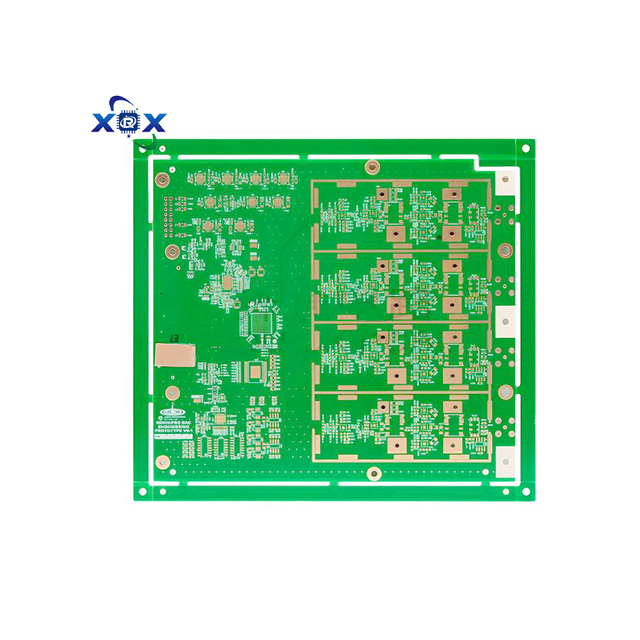
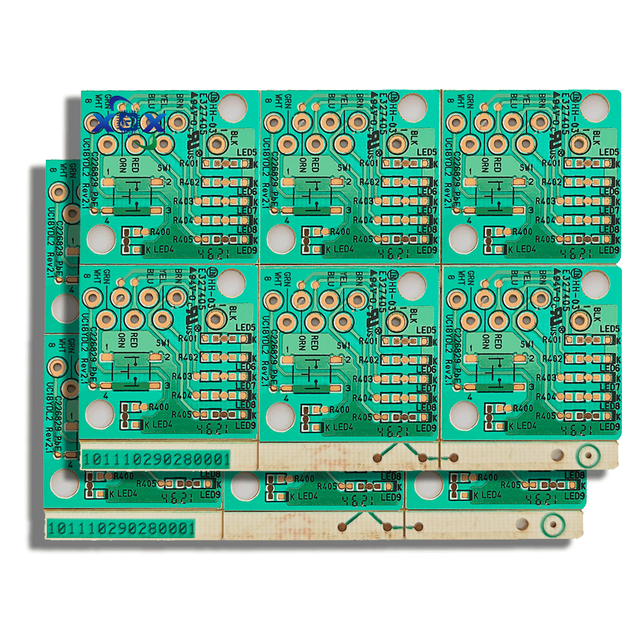
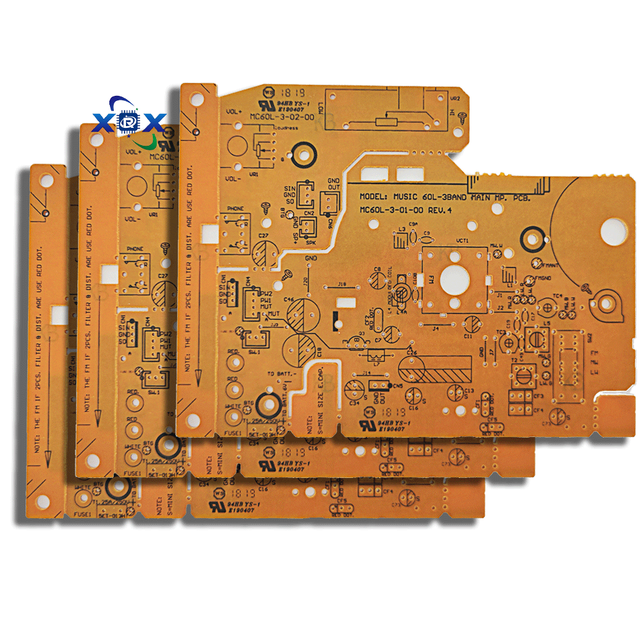
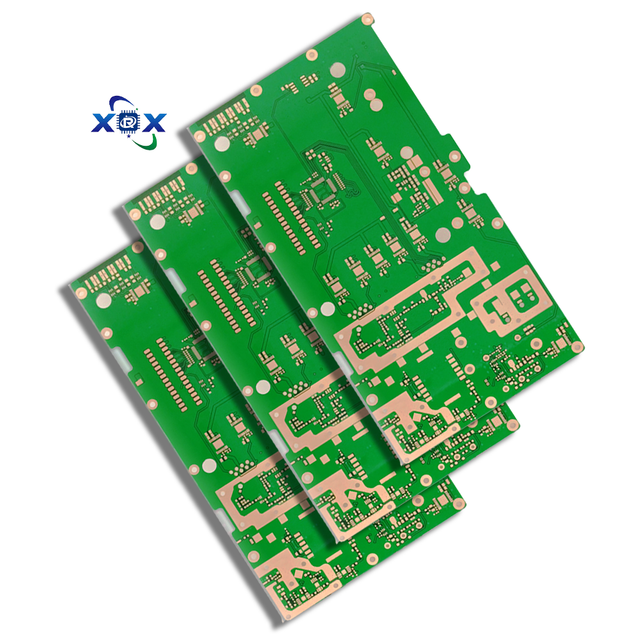
Double Sided PCBs (Double Layer PCBs) are printed circuit boards that have copper conductive layers on both sides.
This design allows for more complex and compact circuitry, ideal for power conversion, industrial controls, automotive, and communication devices.
Through plated through-holes (PTH), the circuits on both sides are connected, improving electrical performance and flexibility compared to single sided boards.
Double-sided PCBs are an evolution of single-sided boards: when a single layer cannot meet the needs of an electronic product, a double-sided PCB provides copper cladding and traces on both sides, with lines between the two layers connected through vias. This solves the limitations of staggered wiring on single-sided boards.
Advantages include:
Simple and efficient wiring.
Less labor-intensive manufacturing.
Shorter trace lengths, improving signal integrity.
Suitability for complex circuits and wider range of applications.
Product Specifications & Technical Capabilities
| Parameter |
Specification / Range |
Description |
Customization |
| Base Materials |
FR-4, CEM-1, CEM-3, FR-1, Aluminum |
Standard laminates for double sided PCB manufacturing. FR-4 offers high strength and thermal resistance. |
Yes |
| Board Thickness |
0.4 mm – 3.2 mm |
Standard range for LED, control, and power circuit applications. |
Yes |
| Copper Thickness |
1 oz – 3 oz (customizable) |
Determines current-carrying capacity; thicker copper for high-power circuits. |
Yes |
| Min. Line Width / Spacing |
4 mil (0.1 mm) / 4 mil (0.1 mm) |
Supports high-density and fine-pitch routing. |
Yes |
| Layer Connections |
Plated Through Holes (PTH) / Vias |
Enables electrical connection between the top and bottom copper layers. |
Standard |
| Surface Finishes |
HASL, Lead-Free HASL, OSP, ENIG, Immersion Gold |
Options for enhanced solderability, corrosion resistance, and appearance. |
Yes |
| Solder Mask Colors |
Green, Black, White, Red, Blue, Yellow |
Custom mask options available for branding or functional identification. |
Yes |
| Flame Retardant Rating |
UL 94V-0 Certified |
Complies with international fire-safety standards for electronics. |
Certified |
| Copper Foil Adhesion Strength |
≥ 1.0 N/mm |
Ensures mechanical stability and reliable performance during soldering. |
Controlled |
| Thermal Conductivity |
0.8 – 2.0 W/m·K |
Higher values available with aluminum substrate for LED & power PCBs. |
Optional |
| Warp & Twist |
≤ 0.7% |
Ensures planarity for precise component placement. |
Standard |
| Testing & Inspection |
AOI, Flying Probe, Impedance Test, E-Test |
100% inspection ensures circuit reliability and quality assurance. |
Standard |
| Operating Temperature Range |
-40°C to +130°C |
Suitable for most industrial and automotive applications. |
Adjustable |
| Certifications |
ISO 9001, UL, RoHS, IPC-A-600 |
Meets global quality and environmental standards. |
Provided |
| Typical Applications |
Consumer Electronics, LED Lighting, Automotive Modules, Industrial Controls, Medical Devices, Telecom Equipment |
Double sided structure supports medium-complexity circuits requiring reliability and efficiency. |
– |
Applications of Double Sided PCB
Double-sided PCBs are widely used in applications that require higher component density and complex circuitry:
Consumer Electronics – smartphones, tablets, audio equipment.
Automotive Systems – dashboards, infotainment, electronic switches.
Industrial Control Devices – automation equipment, power supplies.
Medical Devices – diagnostic and monitoring equipment.
Telecommunication Equipment – routers, base stations.
Advantages of Double Sided PCB
Increased Routing Capacity: Both sides of the board can be used for component placement, reducing board size and improving functionality.
Interleaved Wiring: Unique to double-sided boards, this allows complex network connections between components.
Cost-Effective for Medium Complexity Designs: Offers balance between functionality and affordability.
Improved Thermal Management & Signal Integrity: Shorter trace lengths and better heat dissipation enhance reliability.
Easy and Efficient Wiring: Less labor-intensive compared to manual single-sided layouts.
Key Features & Advantages
| Feature |
Description |
Benefit |
| Dual Copper Layers |
Conductive layers on both sides |
Increased circuit density & routing flexibility |
| Through-Hole Interconnection |
Connects upper & lower layers electrically |
Reliable signal transmission |
| High Durability |
FR4, CEM-3, or aluminum base |
Long lifespan under high load |
| Customizable Thickness & Finish |
0.6–3.0 mm, HASL / ENIG / OSP |
Tailored to project needs |
| Automated Testing & AOI |
100% E-Test, impedance & flying probe test |
Ensures consistent performance |
| RoHS & UL Certified |
Environmentally compliant |
Safe & globally accepted |
Manufacturing Process
Our double sided PCB production uses advanced CNC drilling and PTH plating for maximum reliability.
Here’s a simplified process overview:
1️⃣ Base material cutting & cleaning
2️⃣ Copper lamination on both sides
3️⃣ Drilling & through-hole plating
4️⃣ Photoresist coating & image transfer
5️⃣ Etching & stripping
6️⃣ Surface finishing (ENIG, HASL, etc.)
7️⃣ Silkscreen printing
8️⃣ AOI + E-test + Final Inspection
9️⃣ Vacuum packaging for moisture protection
Why Choose Xinrongxing PCB for Double Sided PCB?
Advanced Manufacturing Capabilities: Precision etching, drilling, and assembly with state-of-the-art equipment.
Strict Quality Control: Compliance with IPC standards, UL & RoHS certification available.
Flexible Order Quantities: From small prototype runs to large-scale production.
Fast Lead Time: Prototypes in 3–5 days, bulk production in 7–15 working days.
OEM / ODM Support: Custom solutions tailored to your project requirements.
Competitive Pricing: Affordable without compromising quality.
Frequently Asked Questions (FAQ)
Q1: What is the main difference between Single Sided PCB and Double Sided PCB?
A: Double sided PCBs have copper tracks on both sides connected through vias, allowing interleaved wiring for more complex circuits. Single-sided boards only have copper on one side.
Q2: When should I choose a Double Sided PCB?
A: Use double-sided PCBs when single-layer wiring cannot meet the requirements of your electronic product or when you need higher component density and complex interconnections.
Q3: What materials are available for Double Sided PCBs?
A: Commonly FR-4 and CEM-1. FR-4 provides high durability, while CEM-1 is more cost-effective for simpler products.
Q4: What is the minimum order quantity (MOQ)?
A: We support both prototypes and mass production orders. Contact us for specifics.
Q5: How long is the production lead time?
A: Prototypes: 3–5 days; Mass production: 7–15 working days depending on complexity.
Q6: Are Double Sided PCBs RoHS and UL certified?
A: Yes, certifications are available upon request.
Q7: Can I customize the surface finish or solder mask color?
A: Yes, we offer HASL, Lead-Free HASL, OSP, and ENIG finishes, with multiple solder mask colors.
Q8: What are the advantages of Double Sided PCB over Single Sided?
A: Easier interleaved wiring, reduced labor, shorter trace lengths, better thermal management, and suitability for more complex circuits.
Certifications & Quality Assurance
Xinrongxing PCB is committed to delivering high-quality, reliable PCBs:
ISO9001 Quality Management System
UL Certification (available)
RoHS Compliance (lead-free production)
IPC-A-600 Class II / Class III Standards
Request a Quote for Double Sided PCB
Looking for a trusted Double Sided PCB manufacturer in China?
Contact Xinrongxing PCB today for a quick quotation. We provide fast lead time, cost-effective pricing, and fully customized PCB solutions to accelerate your project success.
Get in touch now to discuss your requirements!