
close
Choose Your Site
Global
Social Media
Views: 0 Author: Site Editor Publish Time: 2025-11-07 Origin: Site
Filters are vital in PCB Assembly. They control signal flow and block noise. Active and passive filters handle different frequencies and gain. Engineers must choose wisely to optimize performance and reliability. In this article, you will learn active vs passive filters explained for practical PCB design.
Filters remove unwanted noise, isolate desired frequencies, and maintain signal clarity in electronic circuits. They are crucial in audio systems, communication devices, and sensor applications. By controlling the flow of signals, filters ensure components receive clean inputs, which prevents distortion and system errors. Engineers often use active vs passive filters in PCB Assembly depending on whether amplification or simple attenuation is required.
Choosing the correct filter type is essential. Low-pass filters block high frequencies, high-pass filters block low frequencies, and band-pass or band-stop filters isolate specific ranges. The selection impacts both performance and design complexity. Using active vs passive filters in PCB Assembly allows engineers to balance signal requirements with circuit constraints effectively. For example, low-frequency audio circuits often benefit from active filtering, while high-frequency RF circuits rely on passive designs.
Filters are integrated into PCB layouts with careful attention to placement and routing. Improper integration can lead to crosstalk, electromagnetic interference (EMI), or signal distortion. Active filters may require dedicated power lines, while passive filters often demand space for larger inductors or capacitors. Correct placement ensures optimal performance and reliability, making active vs passive filters in PCB Assembly a critical design consideration.
Space constraints, impedance matching, and thermal effects play a significant role in filter design. Active filters offer compact designs but need careful thermal management. Passive filters are simpler but can become bulky for low-frequency applications. Engineers must also consider signal gain, power handling, and component tolerance during PCB Assembly to achieve stable and efficient circuits.
Active filters use op-amps, transistors, resistors, and capacitors to shape signals. Unlike passive filters, they do not include inductors. The active components allow amplification, providing signal gain and avoiding loading effects. In PCB Assembly, these filters are ideal for low-frequency circuits where signal strength must be maintained over multiple stages.
One of the main advantages of active filters is their ability to amplify signals. They maintain consistent signal strength even when driving multiple loads. This is especially useful in audio processing, sensor data acquisition, and communication circuits. Engineers performing active vs passive filters comparison often note that gain control makes active filters highly versatile in PCB Assembly.
Active filters excel in low-frequency applications such as audio systems, biomedical devices, and small-sensor circuits. They provide high input impedance and low output impedance, minimizing interference and preserving signal quality. Active filters are preferred when space is limited, and precise frequency control is required.
Despite their benefits, active filters have limitations. They require external power, are more complex to design, and are susceptible to high currents and limited bandwidth. These factors make them less suitable for high-frequency or high-power applications. Understanding these constraints ensures that engineers choose the right filter for each PCB Assembly scenario.
Passive filters rely on resistors, capacitors, and inductors. They do not require external power and cannot amplify signals. In PCB Assembly, passive filters are often simpler to implement, reliable, and cost-effective. They handle high-frequency signals well and are ideal for applications where signal gain is unnecessary.
Passive filters excel in high-frequency applications such as RF circuits and EMI suppression. Inductors and capacitors efficiently attenuate undesired signals. For designers, passive filters provide stability under large current loads, making them the preferred choice for high-power or high-frequency PCB Assembly scenarios.
Simplicity is a major advantage of passive filters. They are cheaper, require no power supply, and have fewer components, reducing the risk of failure. While bulkier at low frequencies, their reliability and ease of integration often outweigh size concerns in high-frequency or high-power designs.
A key drawback is the inability to amplify signals. Passive filters may also be bulky for low-frequency designs due to large inductors. Load variations can affect performance, requiring careful consideration during PCB layout and assembly.
Feature | Active Filter | Passive Filter |
Power Requirement | Requires external power | No external power needed |
Gain | Provides signal amplification | Attenuates signals |
Size | Compact | Bulky with inductors |
Frequency Range | Limited by op-amp bandwidth | Wide, high-frequency suitable |
Impedance | High input, low output | Medium input/output |
Cost | Higher | Lower |
Complexity | More complex | Simple design |
Current Handling | Limited | Excellent |
Active filters require an external power source to operate, which adds complexity to PCB layout, routing, and power budgeting. Passive filters, by contrast, function without power, making them self-sufficient and simpler to integrate. Engineers must carefully consider whether amplification is necessary or if passive attenuation meets the system requirements. This distinction often affects decisions in high-density or battery-powered PCB Assembly projects.
Active filters work best at low to mid frequencies but are constrained by the bandwidth of active components like op-amps. Passive filters excel in high-frequency environments, handling radio-frequency (RF) signals and EMI suppression efficiently. When designing PCBs, engineers need to evaluate the operating frequency range and choose the filter type that maintains signal fidelity without overcomplicating the design or consuming unnecessary power.
Active filters can amplify signals, providing high output strength while maintaining impedance independence between stages. Passive filters cannot provide gain, and their input/output impedance may vary, potentially affecting signal integrity. This is particularly important when connecting multiple circuit stages or combining sensors with analog-to-digital conversion systems. Understanding impedance effects ensures that the signal remains clean and consistent across the PCB.
Active filters are compact, which is advantageous for PCBs with limited space, though their complexity and need for external power increase cost. Passive filters can be bulky, especially when low-frequency inductors are required, but they are simpler and more cost-effective. Engineers must balance PCB real estate, budget constraints, and performance requirements when selecting the appropriate filter type. Cost and size considerations often guide decisions for mass production versus prototype development.
Active filters are widely used in audio circuits to enhance sound clarity by reducing noise and shaping frequency response. They are suitable for amplifiers, equalizers, and speaker systems where precise control over tonal quality is necessary. By providing signal gain, these filters maintain consistent audio levels across different stages of amplification, ensuring professional-grade audio performance on compact PCBs.
In sensor applications, active filters amplify and smooth output signals, enabling accurate readings for control and measurement devices. They are critical for analog-to-digital conversion systems where signal precision affects the reliability of downstream processing. Compact active filters allow engineers to integrate multiple sensors on a single PCB without losing signal fidelity, which is essential for advanced industrial and IoT systems.
Active filters improve signal integrity in biomedical instrumentation such as ECG or EEG monitoring, as well as in communication receivers. They help reduce interference from environmental noise while maintaining low signal distortion. These filters are indispensable in applications where accurate, low-noise signals are critical, ensuring reliable operation and patient or user safety.
Active filters are preferred in compact low-frequency circuits, where space is limited but signal amplification is required. Their high input impedance and low output impedance make them suitable for cascading multiple stages without loading issues. Engineers often rely on active filters for designs requiring both amplification and precise frequency selection in PCB Assembly.
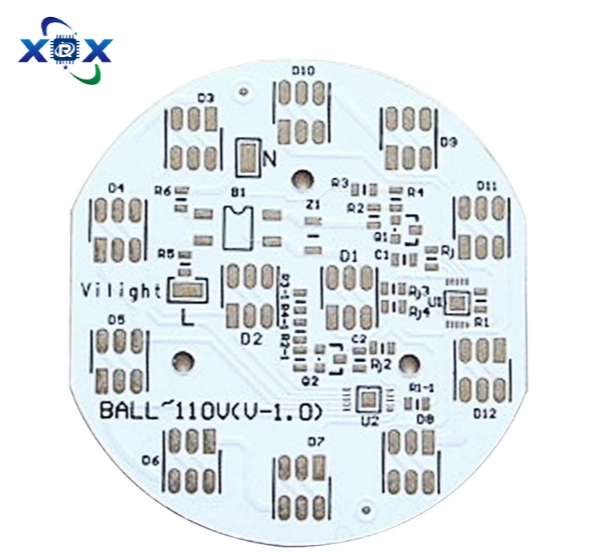
Passive filters are essential in RF communication systems to block unwanted frequencies and suppress electromagnetic interference (EMI). Their reliability in high-frequency environments ensures that signals are clean and clearly transmitted, which is critical for wireless communication modules and IoT devices. They provide predictable performance without the need for additional power sources.
In DC power supplies, passive filters smooth voltage, reduce ripple, and stabilize the output. They protect sensitive components from fluctuations and enhance system reliability. Passive filters are particularly advantageous in industrial and automotive PCBs where robustness and maintenance-free operation are critical.
Passive filters are often used to divide frequency ranges between woofers and tweeters. They simplify speaker system design by ensuring each driver receives the appropriate frequency band without requiring amplification. This approach reduces cost and complexity while maintaining audio quality, making passive filters ideal for consumer and professional audio applications.
Passive filters handle large currents effectively, which makes them suitable for power electronics and high-power audio systems. Unlike active filters, they do not require external power, offering a maintenance-free solution that is reliable under heavy load. Engineers often choose passive filters in high-power PCB designs to ensure long-term stability and safety.
Filter selection depends on the need for amplification, frequency control, and current handling. Active filters are ideal when precise frequency shaping and gain are needed, whereas passive filters excel in high-current or high-frequency scenarios. Evaluating the specific functional requirements helps engineers avoid overcomplicating the PCB while ensuring optimal performance.
Passive filters are simple, cost-effective, and quick to implement. Active filters offer additional functionality but increase design complexity and cost. Decision-making should weigh project budgets against technical requirements, considering factors like component cost, board space, and expected performance.
Active filters are compact, making them suitable for small PCBs or space-limited designs. Passive filters may require additional board area for large inductors, particularly in low-frequency applications. Careful layout planning reduces interference, crosstalk, and unwanted signal distortion, ensuring the circuit functions as intended.
Active filters rely on external power and may require maintenance or monitoring. Passive filters operate without power, providing a maintenance-free option for many applications. Engineers should assess available power sources and system constraints before choosing the appropriate filter type.
Proper placement of filters is crucial for minimizing crosstalk, electromagnetic interference (EMI), and signal degradation in PCB Assembly. Designers should ensure that sensitive traces are physically separated from high-frequency lines and switching circuits. Routing should follow logical paths that reduce loop areas and avoid sharp bends, which can introduce noise or reflections. Thoughtful component placement and trace routing not only enhance signal integrity but also simplify troubleshooting, reduce rework, and improve overall system reliability, especially in high-density PCB layouts.
Active filters can generate significant heat due to the power consumption of op-amps, transistors, and other active components. Overheating can reduce performance, drift component values, or even cause permanent damage. Proper thermal management involves spacing components appropriately, using heat sinks, copper pours, or thermal vias to dissipate heat efficiently. Passive filters, while generating less heat, may still require spacing for large inductors to avoid unwanted magnetic coupling and overheating. Adequate thermal planning ensures long-term performance stability and prevents reliability issues in demanding applications.
High-quality soldering is essential to maintain electrical continuity and mechanical strength in PCB assemblies. Components should be correctly oriented, with pins fully seated and joints properly wetted to prevent cold solder joints or shorts. For active filters, reliable soldering ensures consistent power and signal performance, while for passive filters, it prevents resistance drift or inductor dislodgement. Implementing robust assembly practices reduces failure rates, extends PCB lifespan, and is particularly critical in high-density or multi-layer boards where rework is difficult and costly.
Testing filters during and after assembly ensures optimal performance and early detection of failures. Use oscilloscopes, spectrum analyzers, or network analyzers to verify frequency response, gain, and impedance characteristics. Identify faulty components or miswirings before system integration to avoid costly downtime or cascading failures. Regular testing across varying environmental conditions also confirms reliability, providing engineers with confidence that both active and passive filters will perform as designed. Proactive troubleshooting minimizes production issues and ensures that the PCB meets stringent design specifications.
Active filters offer gain, precision, and compact design but need power. Passive filters are reliable, cost-effective, and handle high frequencies or currents. Choosing the right filter in PCB Assembly ensures optimal signal and performance. Dongguan Xinrongxing Technology Co., Ltd. provides high-quality PCB solutions that enhance circuit reliability and efficiency, adding value to your designs.
A: Active filters use power to amplify signals, while passive filters rely on resistors, capacitors, and inductors. Active vs passive filters explained helps engineers select the right type for PCB Assembly.
A: Consider signal gain, frequency range, current handling, and space. An active vs passive filters comparison clarifies which filter suits your PCB Assembly design needs.
A: Active filters provide signal amplification, precise frequency control, and compact layouts. They improve audio systems, sensor readings, and low-frequency circuits in active vs passive filters in PCB Assembly.
A: Passive filters excel in high-frequency or high-current applications. They are simple, reliable, and cost-effective, making them ideal for passive vs active filters applications in PCB Assembly.
A: Yes, active filters need an external power source. Passive filters operate independently, so power availability is crucial when designing active vs passive filters in PCB Assembly.
A: Yes, passive filters handle large currents without amplification. Their reliability makes them ideal in passive vs active filters applications for industrial or power electronics PCB Assembly.
A: Choosing the right filter impacts signal clarity, noise reduction, and system reliability. Active vs passive filters comparison ensures optimized PCB Assembly performance.
A: Active filters are more complex and costly, while passive filters are simpler and budget-friendly. Active vs passive filters explained helps balance cost and performance in PCB Assembly.
A: Use oscilloscopes or network analyzers to check filter performance. Early detection prevents failures, ensuring active vs passive filters in PCB Assembly work correctly.
A: Yes, hybrid designs leverage active gain and passive reliability. Understanding active vs passive filters explained allows engineers to optimize performance and space.


