
close
Choose Your Site
Global
Social Media
Views: 0 Author: Site Editor Publish Time: 2025-11-07 Origin: Site
Ever wondered how electronics really work? In PCB Assembly, active components control or amplify signals, while passive components store or regulate energy. Understanding these differences is essential for reliable circuits. In this article, you will learn their key roles, practical uses, and how they impact overall PCB performance.
Active components are devices that can control or amplify electrical signals in a circuit. Examples include transistors, diodes, and integrated circuits. They depend on external power to function and inject energy into the system. These components are essential for signal processing, switching, and amplification tasks. Without active components, circuits cannot perform complex operations or respond to inputs dynamically.
Passive components, including resistors, capacitors, and inductors, store or dissipate energy. They do not amplify signals and operate without external power. Their role is to shape voltage and current, filter noise, and maintain signal integrity. Passive components are indispensable for ensuring stable and predictable circuit behavior.
Both component types are critical for a functional PCB Assembly. Active components drive circuit operations, while passive components provide stability and support. Engineers must balance these elements to avoid interference and maintain efficiency. The interaction between active and passive components dictates overall circuit performance.
Active and passive components influence signal direction, amplitude, and quality. Active devices can boost weak signals, while passive devices control, filter, or store energy. Proper arrangement affects voltage levels and current distribution, crucial for high-frequency or sensitive applications. Engineers use these properties to optimize signal flow in complex PCBs.
Transistors amplify signals or act as switches, impacting overall PCB performance. They are used in logic circuits, amplifiers, and voltage regulators. The operating point of a transistor affects signal gain and efficiency. Careful placement ensures minimal signal loss and reduces electromagnetic interference.
Diodes allow current to flow in one direction and block it in the opposite direction. They are used for rectification, voltage clamping, and circuit protection. Specialized diodes, such as LEDs or Zener diodes, serve additional functions. Their placement is critical in ensuring proper current direction and preventing circuit damage.
ICs integrate multiple active and passive elements on a single chip. They perform complex functions like logic processing, signal amplification, and power management. ICs reduce board space and enhance efficiency. Engineers must consider thermal dissipation and routing when integrating ICs into PCB Assembly.
Power sources such as batteries and current regulators drive circuits. They are classified as active components because they provide energy for operation. Proper voltage regulation is essential to prevent component failure. Active power sources ensure circuit stability under varying load conditions.
Table 1: Active Components Overview
Component Type | Function | Dependency | Typical Applications |
Transistor | Amplification, Switching | External Power | Amplifiers, Logic Circuits |
Diode | Unidirectional Current | External Power | Rectifiers, Protection Circuits |
IC | Multi-function Logic | External Power | Microcontrollers, Power Management |
Voltage Source | Drive Circuit | External Power | Batteries, Regulators |
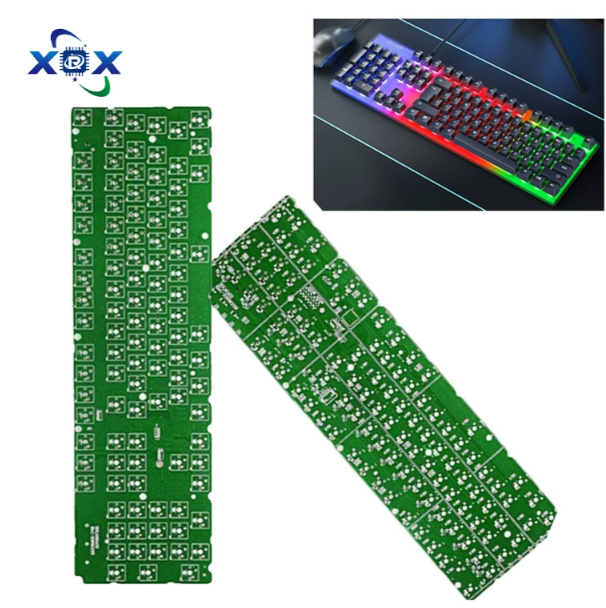
Resistors limit current, divide voltage, and condition signals. They provide precise control over circuit operation. Variations in resistance affect current flow and component protection. Engineers use resistors to set operating points in active circuits.
Capacitors store and release electrical energy, filter signals, and stabilize voltage lines. They are critical in smoothing power supply fluctuations. Capacitors also block DC while passing AC in signal circuits. Their value and placement determine filtering efficiency.
Inductors store energy in magnetic fields and oppose sudden current changes. They are used in RF circuits, power supplies, and signal smoothing. Correct selection prevents resonance issues and energy loss. Inductors complement capacitors in filter and energy storage applications.
Transformers transfer energy between circuits using magnetic induction. They enable voltage conversion and isolation. Other passive devices, like thermistors, also support circuit stability. Engineers combine these components to ensure safe and efficient power distribution.
Table 2: Passive Components Overview
Component Type | Function | Energy Role | Common Use |
Resistor | Current Control | Absorb | Voltage Division, Signal Conditioning |
Capacitor | Store/Filter Energy | Store | Power Supply Smoothing, Coupling |
Inductor | Magnetic Energy | Store | RF Filters, Power Regulation |
Transformer | Voltage Conversion | Transfer | Step-up/Step-down Circuits |
Active components are capable of injecting energy into a circuit, either by amplifying currents or switching them on and off, which directly affects the overall circuit functionality. In contrast, passive components do not generate energy; they primarily store, dissipate, or regulate it, such as resistors controlling current or capacitors storing charge. This fundamental distinction significantly influences PCB layout, component selection, and thermal management, as designers must balance energy flow for both reliability and efficiency in complex assemblies.
Active components possess the ability to control electrical current and amplify signals, enabling dynamic circuit operations such as signal processing, switching, and logic execution. Passive components, however, cannot produce energy or increase signal strength. Their role is to support circuit operation, regulate voltage, and filter unwanted noise. Understanding the complementary functions of active and passive components is essential for engineers to design circuits that maintain signal fidelity, optimize power efficiency, and achieve predictable performance across different operating conditions.
Active components, like diodes and transistors, often exhibit unidirectional behavior, meaning they allow current flow or signal propagation in a controlled manner. Passive components, such as resistors, capacitors, and inductors, generally permit bidirectional current flow, providing flexibility in shaping signal paths. Engineers leverage these characteristics to design effective signal routing, reduce interference, and ensure proper energy distribution, especially in high-frequency or sensitive applications where precision and stability are critical to maintaining circuit performance.
Active components require external power to function, which means their performance depends on stable voltage and current sources. Passive components, conversely, operate independently and can function without additional energy input, making them ideal for energy storage, filtering, and signal conditioning. This difference affects PCB design strategies, including component placement, thermal management, and power supply routing, as improper handling of active components can result in excessive heat generation or circuit instability.
Modern consumer electronics, including smartphones, laptops, and wearable devices, integrate both active and passive components to ensure optimal performance. Active ICs perform processing, signal amplification, and control tasks, while passive components stabilize power delivery, filter noise, and maintain signal integrity. A well-balanced integration of these elements ensures high efficiency, longevity, and minimal power loss, ultimately delivering a reliable user experience even under demanding operational conditions.
In power supply designs, active regulators dynamically control voltage and current to maintain stability under varying loads. Passive components, such as capacitors and inductors, smooth voltage fluctuations and filter noise, ensuring steady energy delivery. The synergy between active and passive components is crucial for preventing overheating, protecting sensitive devices, and achieving consistent power management across a range of operating conditions, enhancing both reliability and overall circuit lifespan.
Communication circuits, including RF modules and audio systems, rely heavily on both active and passive components. Passive devices filter and tune signals to reduce interference and noise, while active components amplify or modulate signals for proper transmission. Combining these components ensures high signal integrity, accurate frequency response, and minimal distortion, which is essential for high-speed data communication, wireless connectivity, and precision audio applications, where even minor signal degradation can significantly impact performance.
Industrial control systems and automotive electronics use a complex mixture of active and passive components. Active elements process sensor inputs, perform control logic, and drive outputs, while passive components filter signals, provide protection, and manage energy flow. Proper interaction between these components ensures system reliability under extreme conditions, such as high temperature, vibration, or electrical noise, making careful selection and layout essential for durable, safe, and high-performance industrial and automotive applications.
Strategic component placement enhances performance and reduces interference. Active components should be located close to their respective loads to minimize voltage drops and signal delay, while passive components like decoupling capacitors should be near ICs to improve filtering efficiency. Thoughtful layout design, including grounding and signal routing, helps minimize electromagnetic interference, crosstalk, and noise, ultimately ensuring that PCB assemblies operate reliably in both high-speed digital and sensitive analog applications.
Active components generate heat during operation, requiring effective thermal management through heat sinks, thermal vias, and optimized airflow. While passive components produce less heat, their thermal properties can still influence overall temperature distribution across the PCB. Efficient thermal design not only prevents component failure but also improves long-term reliability and operational stability, which is especially important for densely populated boards and high-power applications where overheating could compromise performance or lifespan.
Proper soldering ensures secure electrical connections, minimizing the risk of intermittent failures or signal degradation. Poor solder joints can lead to catastrophic circuit failures, particularly in high-frequency or high-power applications. Automated soldering, combined with quality inspection techniques, ensures consistent reliability. Additionally, engineers must consider the mechanical stress, thermal cycling, and environmental conditions to maintain long-term performance of both active and passive components on the PCB.
Minimizing signal interference requires careful attention to component spacing, grounding strategies, and electromagnetic shielding. Passive components, like filters and bypass capacitors, remove high-frequency noise before it affects active circuits. Engineers often use simulation tools to predict EMI and crosstalk, allowing them to refine PCB layouts and improve overall signal integrity. Proper interference management is crucial for high-speed communication circuits, RF applications, and precision measurement systems.
Diagnosing failures requires distinguishing between active and passive component issues. Active component faults often manifest as amplification loss, switching failures, or voltage irregularities. Passive component failures may include resistance drift, capacitor leakage, or inductor saturation. Systematic testing and diagnostic procedures allow engineers to isolate problem areas efficiently, preventing cascading failures and ensuring timely repair or replacement without compromising overall circuit performance.
Comprehensive testing involves measuring voltage levels, current flow, and signal amplification to evaluate component performance. Tools like oscilloscopes, multimeters, and logic analyzers help detect anomalies in both active and passive devices. Accurate testing ensures that all components operate within their specified tolerances, which is critical for maintaining reliability, especially in mission-critical applications where minor deviations can lead to major system malfunctions.
When faults are identified, replacing defective components with equivalent or higher-rated alternatives restores circuit functionality. Engineers must document repairs and replacements to maintain traceability, ensure future maintenance efficiency, and prevent repeated failures. Correct handling and installation of replacement components are essential to maintain circuit integrity, especially for active devices sensitive to voltage fluctuations or passive components affecting signal filtering.
Regular inspection, cleaning, and monitoring of PCBs prolong component life and enhance reliability. Ensuring proper thermal management, avoiding excessive loads, and protecting against environmental stressors reduces the likelihood of premature failures. Preventive maintenance strategies, including routine testing and real-time monitoring, minimize downtime, improve device longevity, and maintain consistent performance across a wide range of operating conditions.
Surface-mount technology (SMT) enables smaller, lighter, and more compact PCBs, allowing higher component density without sacrificing functionality. Miniaturized active and passive components support portable devices and sophisticated electronics. This trend drives innovation in mobile devices, wearable technology, and compact industrial controllers, where space efficiency and high performance are critical.
Designers are increasingly focused on reducing energy consumption by using low-power active components and optimized passive elements. Energy-efficient PCBs extend battery life, reduce heat generation, and support sustainable electronics. Efficiency improvements are particularly important for IoT devices, wearables, and other low-power applications where prolonged operation is a key requirement.
Combining active and passive elements into integrated packages saves board space and simplifies routing. Hybrid components streamline design, reduce assembly complexity, and improve overall performance. As PCB technology evolves, engineers increasingly adopt multi-functional components to meet demands for smaller, faster, and more reliable electronic systems.
The adoption of advanced materials, including wide-bandgap semiconductors, high-performance dielectrics, and improved magnetic cores, enhances both active and passive component performance. These materials allow higher operating frequencies, superior thermal resistance, and better signal integrity. Incorporating advanced materials enables PCBs to meet the demands of next-generation applications in automotive, industrial, and high-speed communication systems.
Active and passive components work together in PCB Assembly. Active devices control signals, while passive devices stabilize and filter energy. Dongguan Xinrongxing Technology Co., Ltd. provides high-quality LED PCBs that ensure efficiency and reliability. Their products enhance performance and support durable, high-performance electronic designs.
A: Active components control or amplify signals, while passive components store, filter, or dissipate energy. Understanding passive vs active components in PCB helps optimize circuit performance and efficiency.
A: Knowing active vs passive components explained allows engineers to design reliable, high-performance PCBs and avoid common circuit failures.
A: Passive components regulate voltage, filter noise, and stabilize power. Their proper integration is essential for active vs passive PCB components comparison.
A: Active devices need passive components like resistors and capacitors for filtering and stability. Passive component uses and differences show why they are indispensable.
A: Passive components are used for energy storage, filtering, and signal conditioning in PCB Assembly, improving overall circuit reliability.
A: Active components like ICs and transistors are typically more expensive than passive ones, but they are critical for amplification and control in PCB Assembly.
A: Consider signal directionality, power handling, and placement. Active vs passive PCB components comparison helps select the right mix for efficiency and reliability.
A: Test for resistance drift, capacitor leakage, or voltage drops. Understanding passive component uses and differences aids in quick fault isolation.
A: Combining active and passive components ensures stable power, accurate signal control, and optimized performance, making PCB Assembly more robust.
A: Active components can amplify or switch currents, while passive components manage signal quality. Active vs passive PCB components comparison ensures proper signal routing.


