
close
Choose Your Site
Global
Social Media
Views: 0 Author: Site Editor Publish Time: 2025-11-07 Origin: Site
5G is changing wireless speed, and PCB design faces new challenges. High frequencies need precise materials, while thermal and signal integrity matter. In this guide, you will learn layout strategies, stack-up optimization, and RF integration tips to build reliable 5G PCBs.
5G primarily operates in sub-6 GHz and mmWave bands. Sub-6 GHz provides broad coverage and superior penetration, suitable for urban and rural networks. In contrast, mmWave enables ultra-fast data rates and low latency but is highly sensitive to obstacles. These frequency differences affect PCB design, dictating dielectric constant, layer count, and trace geometry. Engineers must use low-loss materials such as Rogers, PTFE, or LCP for mmWave applications to minimize signal degradation. Proper stack-up planning ensures stable impedance and reduces reflection or crosstalk across multiple layers.
High-speed 5G data requires careful consideration of multilayer PCB layout. Trace lengths, routing paths, and layer selection directly impact signal integrity. Multilayer HDI boards shorten signal paths, reducing delay and parasitic effects. Controlled impedance techniques, such as microstrip and stripline configurations, maintain consistent performance across layers. Engineers also use solid ground planes and via fences to minimize electromagnetic interference (EMI) and maintain signal quality.
5G PCB demand spans mobile devices, IoT modules, automotive systems, and AR/VR platforms. Each industry imposes unique requirements: compact multilayer boards for mobile phones, thermally robust boards for base stations, and energy-efficient designs for IoT. Automotive PCBs must endure vibration, temperature fluctuations, and EMI. AR/VR systems demand ultra-low latency, necessitating precise RF routing and shielding strategies.
Competitive markets require PCBs that balance manufacturability, cost, and performance. Advanced PCB techniques, such as HDI and hybrid stack-ups, provide better signal integrity and thermal management. Manufacturers capable of processing high-frequency laminates and maintaining tight tolerances gain a strategic advantage. Collaboration across the supply chain—from designers to fabricators—ensures consistent quality and timely delivery.
Materials for 5G PCBs must feature low dielectric constant (Dk) and low dissipation factor (Df) to minimize signal loss. Thermal stability and mechanical reliability are essential for boards subjected to high-power components and continuous operation. These characteristics ensure consistent impedance across layers and prevent performance degradation over time. Material uniformity across panels is critical for phased-array antennas and mmWave modules.
FR-4 is suitable for sub-6 GHz or low-speed circuits but underperforms at mmWave frequencies due to higher signal loss. High-frequency laminates such as Rogers, PTFE, and LCP maintain stable Dk and Df across temperature and frequency ranges. They support controlled impedance, reduce insertion loss, and improve RF performance. However, these materials are costlier and require precise handling during drilling and lamination.
Hybrid stack-ups combine FR-4 with high-frequency cores to optimize performance and cost. Signal-sensitive layers utilize high-frequency materials, while non-critical layers employ FR-4. This approach balances thermal management, signal integrity, and manufacturability. Designers must carefully plan layer arrangement to minimize interference and maintain mechanical strength.
Material | Dielectric Constant (Dk) | Dissipation Factor (Df) | Typical Use Case |
FR-4 | 4.3 | 0.02 | Sub-6 GHz PCB layers |
Rogers | 3.48 | 0.0027 | mmWave, RF-critical layers |
PTFE | 2.1–2.3 | 0.0009 | High-speed RF and antenna layers |
LCP | 3.0 | 0.002 | Compact, high-frequency IoT/5G boards |
Copper roughness, drilling precision, and lamination quality significantly impact PCB performance. Variations in dielectric thickness can shift impedance, causing reflections and signal degradation. Collaboration with PCB manufacturers ensures that materials are processed consistently and tolerances are met, especially for HDI boards and fine-line routing.
High-density interconnect (HDI) PCBs are standard in 5G designs. Thin cores, multiple layers, and fine-line routing shorten signal paths and reduce latency. Shorter traces minimize parasitic capacitance and inductance, enhancing signal integrity. Designers prioritize layer alignment and stack-up symmetry to control impedance and reduce crosstalk.
Maintaining consistent impedance requires careful trace width, spacing, and dielectric height control. Microstrip and stripline configurations ensure stable signal propagation. Coupled with solid ground planes and via fences, controlled impedance techniques minimize reflections, EMI, and noise across multilayer PCBs.
Short, direct traces for RF and high-speed digital signals are essential. Sharp bends create parasitic capacitance, so curved or mitered trace turns are preferred. Separation of digital and RF tracks reduces interference. Signal paths must be carefully calculated to maintain consistent impedance and reduce power loss.
Solid ground planes and strategic via placement reduce EMI. Shielding compartments separate high-speed digital circuits from RF modules. Proper grounding ensures signal return paths are short and consistent, critical for phased-array antennas and mmWave systems.
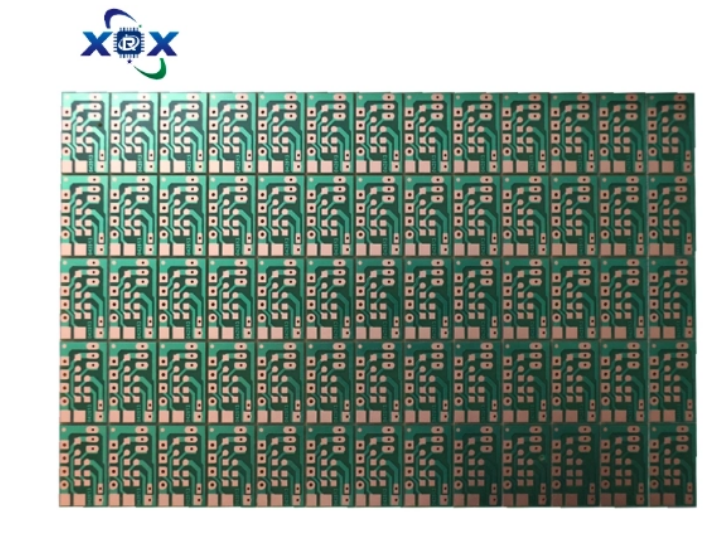
The layout of phased-array antennas directly determines beamforming precision and signal direction. PCB designers must ensure RF paths remain short while maintaining clear separation from noise sources and power traces. Proper layer assignment, controlled impedance, and strategic grounding preserve signal strength and minimize interference. Additionally, designers often use hybrid stack-ups and selective shielding to maintain consistent high-frequency performance across complex arrays. Early integration of antenna layout into the PCB design phase is essential for achieving predictable radiation patterns and reliable mmWave operation.
Minimizing signal loss between antennas and RF modules requires careful attention to trace length, shielding, and isolation from digital noise. Maintaining precise impedance matching to 50Ω is critical to prevent reflection and maintain signal quality. Simulation tools such as ADS or HFSS help validate antenna performance before fabrication, allowing adjustments to trace geometry, layer thickness, and component placement. Designers must also consider material dielectric stability and copper surface finish, as even minor deviations can cause measurable loss at high frequencies. Effective coupling strategies ensure the antenna and PCB operate as a single, efficient RF system.
IoT devices, wearables, and small-form-factor boards demand compact layouts without compromising RF efficiency. Designers must balance limited space, thermal dissipation, and antenna performance, often using hybrid stack-ups to optimize cost and signal integrity. Selective shielding and strategic component placement maintain high-frequency stability, even when routing multiple RF traces in tight areas. Thermal management is particularly critical, as dense boards can create hotspots that degrade performance. In addition, designers must carefully separate RF and digital domains to reduce interference while maximizing usable board area for additional functionality.
Maintaining a consistent 50Ω impedance is critical for signal integrity in high-frequency PCBs. Coplanar and microstrip line techniques, combined with careful trace width control, precise layer placement, and solid grounding, prevent reflection and signal loss. Prototypes are used to validate impedance across multiple production units, ensuring reliable RF performance in mass manufacturing. Designers should also verify matching across temperature variations, as dielectric constants can shift under thermal stress. Combining simulation, prototyping, and controlled stack-up strategies ensures that impedance remains consistent, supporting high-speed signal transmission and efficient antenna operation.
High-frequency signals can induce electromagnetic interference (EMI) that affects neighboring components. Designers mitigate noise by employing shielding, solid ground planes, and careful routing to control coupling between traces. Segregating RF and digital sections further reduces crosstalk and improves overall signal integrity. Additionally, strategic via placement and ground stitching enhance EMI resilience in densely routed boards. Ignoring EMI considerations in early design stages can lead to signal degradation, compliance failures, and costly redesigns, particularly in automotive or industrial 5G applications.
Dense 5G components generate significant heat during operation. Thermal vias, high-conductivity copper planes, and optimized airflow maintain stable operating temperatures across the PCB. Localized thermal management is essential for heat-sensitive RF modules, preventing drift in impedance or signal degradation. Designers also consider stack-up thickness, material thermal conductivity, and proximity of high-power components to maintain performance. Failure to address thermal loads can reduce device lifespan and degrade mmWave performance, especially in compact or high-density designs.
5G PCBs undergo rigorous thermal cycling, vibration, and mechanical stress testing to ensure long-term stability. These tests validate both material performance and stack-up reliability, ensuring that thermal expansion or mechanical deformation does not compromise signal integrity. Automotive, aerospace, and industrial applications demand robust testing to guarantee durability under harsh environmental conditions. Additionally, simulated aging and power cycling help identify potential weak points, enabling design adjustments before production, reducing warranty claims, and improving customer satisfaction.
Optimized copper planes and strategic component layouts minimize hotspots and electrical interference while supporting thermal dissipation. Designers must carefully balance board size, signal routing, and heat flow to maximize reliability. Layer assignment, plane continuity, and trace spacing are adjusted to ensure electrical and thermal performance are simultaneously addressed. Placing high-speed and RF signals near solid ground planes enhances return paths and reduces EMI. Effective placement strategies contribute to both manufacturability and long-term reliability, critical for high-performance 5G devices.
5G PCBs require precise HDI fabrication, semi-additive processing, and extremely tight tolerances. Minor deviations in trace width, dielectric thickness, or via alignment can significantly affect impedance and signal performance. Manufacturers must maintain high precision across large-scale production runs to ensure consistent RF behavior. Advanced inspection and quality control processes, such as AOI and impedance testing, are integral for maintaining repeatable performance. Collaboration with engineers ensures that high-density designs remain manufacturable without sacrificing performance or yield.
Blind, buried, and backdrilled vias enhance signal integrity and minimize stub effects in high-frequency designs. Copper surface finish is critical at mmWave frequencies due to skin effect, which confines high-speed currents to the outer microns of copper. Proper via plating and surface treatment maintain consistent impedance and reduce signal attenuation. Designers must specify tight tolerances for via depth and diameter to prevent resonance, especially in high-density multilayer HDI stack-ups. Careful coordination with manufacturers ensures that complex via structures are executed reliably across production.
Placement accuracy for mmWave components is crucial, as misaligned parts disrupt signal paths and degrade RF performance. Solder mask control affects microstrip impedance and can lead to performance variability. High-frequency boards often require precise pick-and-place machines and inspection to prevent micro-scale misalignments. Correct thermal profiles during soldering prevent warping and maintain material stability. Integrating quality assurance checkpoints early in assembly ensures the final product meets electrical and mechanical specifications, reducing rework and improving yield.
Early communication with PCB fabs ensures alignment on design tolerances, material capabilities, and stack-up strategies. Prototyping allows validation of materials, RF performance, and thermal behavior before mass production. This collaborative approach reduces errors, improves first-pass yield, and accelerates time-to-market. Frequent feedback loops between design engineers and manufacturers help identify potential issues with trace geometry, layer alignment, or dielectric uniformity. Engaging manufacturers as partners early mitigates costly revisions and ensures that 5G PCBs meet the demanding requirements of next-generation devices.
Ensure that stack-ups, trace widths, and via geometries can be reliably produced at scale. Designers should account for material availability, long-term supply, and compatibility with manufacturing capabilities. Prioritizing DFM reduces rework, shortens development cycles, and ensures consistent performance across production batches. Balancing electrical performance with manufacturability ensures boards are not only functional but also cost-effective and reproducible.
Early testing of antenna performance, signal integrity, and thermal behavior identifies potential design issues before committing to mass production. Iterative prototyping allows material substitution, stack-up refinement, and trace routing optimization. Feedback from initial prototypes informs adjustments that improve RF performance, minimize EMI, and optimize thermal dissipation. Multiple iteration cycles reduce the risk of post-production failures and ensure first-pass success in high-frequency PCBs.
Preparing 5G PCBs for higher-frequency 6G applications involves scalable designs, flexible materials, and adaptable stack-ups. Anticipating future requirements, such as higher data rates and additional MIMO channels, reduces redesign costs and ensures longevity. Designers should evaluate material dielectric properties, thermal stability, and impedance consistency for potential next-generation applications. Building in modularity and flexibility allows upgrades or modifications without full board redesign, providing a competitive advantage in evolving markets.
Collaboration among designers, RF engineers, and manufacturers ensures holistic optimization of signal, thermal, and mechanical performance. Integrated planning addresses EMI mitigation, thermal dissipation, and stack-up consistency simultaneously. Cross-functional review of prototypes and simulations prevents isolated design decisions from compromising overall performance. This approach accelerates development, improves reliability, and ensures that 5G PCBs meet stringent performance targets across multiple applications and industries.
5G PCB design demands precise materials, optimized stack-ups, and controlled impedance. Effective RF integration and EMI control ensure reliable performance. Dongguan Xinrongxing Technology Co., Ltd. provides high-quality PCBs that enhance signal integrity and thermal management, supporting mobile, IoT, and automotive applications with reliable, efficient solutions.
A: 5G PCB design focuses on high-frequency signal integrity, controlled impedance, and thermal management to support next-generation mobile, IoT, and automotive applications. Following 5G PCB design best practices ensures reliable performance.
A: Proper PCB materials reduce signal loss and maintain stable impedance at mmWave frequencies. Using a 5G PCB material selection guide helps designers choose low-loss laminates like Rogers or PTFE for high-performance RF boards.
A: Optimize trace width, spacing, and layer stack-up for minimal interference. High-frequency PCB layout for 5G emphasizes short RF paths, controlled impedance, and careful grounding to prevent EMI and signal reflection.
A: 5G RF PCB stackup design tips include managing multiple layers, ensuring uniform impedance, and isolating sensitive signals. Challenges involve thermal management, compact layouts, and maintaining signal integrity at mmWave frequencies.
A: Use solid ground planes, shielding, and careful routing to separate digital and RF signals. Incorporating 5G PCB design best practices minimizes electromagnetic interference and maintains consistent performance.
A: Hybrid stack-ups combine FR-4 with high-frequency laminates, balancing cost, signal integrity, and thermal performance. They ensure reliable high-speed communication for IoT, mobile, and automotive PCBs.
A: Costs depend on material choice, layer count, and HDI complexity. Using premium laminates and precise stack-ups increases performance and price but ensures durability and low signal loss.
A: Prototype testing with RF simulation tools like ADS or HFSS verifies antenna performance, impedance, and signal integrity. Early iteration follows 5G PCB design best practices to prevent costly production errors.


