
close
Choose Your Site
Global
Social Media
Views: 0 Author: Site Editor Publish Time: 2026-03-18 Origin: Site
High-power PCB Design often faces severe heat issues. Excessive heat can damage components and reduce efficiency. In this article, we explore methods to manage thermal challenges and optimize PCB performance.
High-power PCBs generate significant heat during operation, mainly from components like processors, MOSFETs, LEDs, and IGBTs. Each of these devices converts electrical energy into heat, which accumulates on the board if not managed effectively. High-current traces amplify this effect, especially in dense layouts where many components share limited space.
Environmental factors, such as ambient temperature or airflow restrictions inside enclosures, can further elevate the PCB’s surface temperature. Even minor design oversights, like placing sensitive sensors near hot traces, may lead to thermal stress over time. They can reduce performance and affect overall device reliability.
At Xinrongxing, PCB Design considers these elements early, optimizing trace routing and component positioning to reduce hotspots.
Locating thermal hotspots is essential before fabrication. Hotspots are areas where the temperature exceeds safe operating limits and can cause premature component failure. Designers use thermal simulation software to visualize heat distribution, often producing a color-coded map showing temperatures across the PCB.
Component placement affects these zones: placing multiple high-power parts too close together creates clusters that exacerbate heating. Thermal modeling helps designers determine optimal component spacing and orientation. Engineers often iterate layouts several times, combining simulation results and empirical knowledge to prevent uneven temperature rise.
Tools and methods for hotspot analysis include:
● Finite Element Analysis (FEA) for heat flow simulation
● Infrared imaging for real-time temperature mapping
● Current density analysis to locate potential thermal bottlenecks
Hotspot Identification Methods | Purpose |
Thermal simulation | Predict high-temperature areas before fabrication |
Infrared imaging | Verify actual PCB heat distribution in prototypes |
Current density mapping | Identify traces prone to resistive heating |
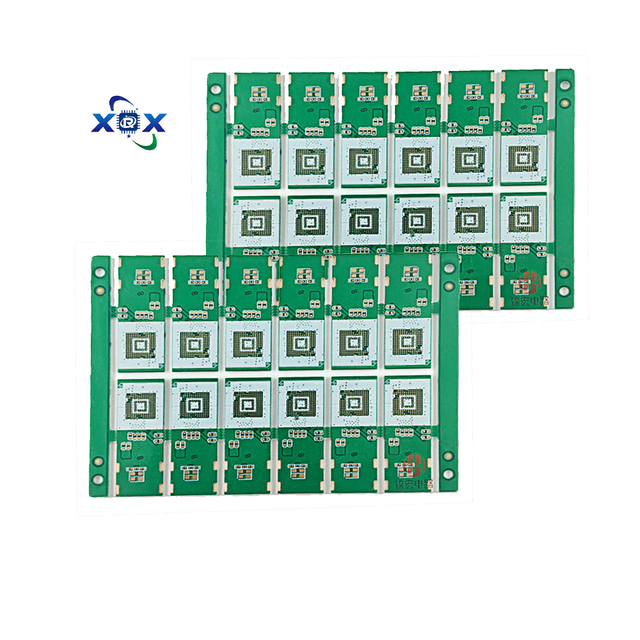
Ignoring heat control in high-power PCB Design can cause multiple issues. Components may overheat, shortening lifespan or causing immediate failure. Excessive heat increases electrical resistance in traces, degrading performance over time. Thermal stress can warp the board or delaminate layers, particularly in multilayer or aluminum-substrate boards. Devices operating near thermal limits risk tripping protection circuits or reducing efficiency.
Additionally, unsafe temperatures may create safety hazards, especially in consumer or industrial electronics. Using poorly managed PCBs increases maintenance costs and impacts reliability.
Xinrongxing addresses these challenges by integrating thermal considerations into both design and material selection, including copper thickness, substrate choice, and strategic component placement.
Choosing the right PCB substrate material is critical for managing heat in high-power designs. Standard FR-4 is common, cost-effective, and easy to work with but offers low thermal conductivity (~0.3 W/m·K). For better performance, high-Tg FR-4 increases glass transition temperature, helping boards withstand higher temperatures without warping.
Metal-core PCBs (MCPCBs) and ceramic substrates provide excellent thermal conductivity, quickly transferring heat from hotspots. These materials are ideal for LEDs, automotive power modules, and industrial electronics. Designers must balance cost and performance, considering both the operating environment and the power density of the circuit.
Comparison of Substrate Materials:
Material | Thermal Conductivity (W/m·K) | Best Use Cases |
FR-4 | 0.25–0.3 | Low to moderate power circuits |
High-Tg FR-4 | 0.3–0.4 | Elevated temperature applications |
Aluminum (MCPCB) | 40–180 | High-power LEDs, automotive |
Ceramic | 20–30 | Extreme heat or precision boards |
The copper layer in PCB Design plays a huge role in thermal management. Thicker copper reduces electrical resistance and spreads heat along traces efficiently. Trace width is equally important; narrow traces concentrate heat, risking hotspots.
Using internal power and ground planes as heat spreaders helps dissipate energy across larger areas, lowering surface temperatures. For high-current or high-power traces, designers often increase copper weight to 2 oz/ft² or more. Xinrongxing’s PCB Design expertise ensures optimal trace geometry, spacing, and copper selection to prevent overheating.
Key design considerations:
● Use thicker copper for power-intensive traces to reduce thermal rise
● Include continuous ground or power planes for heat spreading
● Maintain adequate spacing between high-current paths and sensitive components
Aluminum PCBs combine multiple layers: a copper circuit layer, a dielectric insulation layer, and an aluminum base. This layered structure provides both electrical isolation and efficient heat dissipation. Copper layer conducts heat laterally; dielectric controls transfer rate; aluminum quickly spreads and removes heat. These boards excel in LED lighting, automotive electronics, and industrial power modules where heat management is critical.
Designers can also customize copper thickness, dielectric type, and aluminum alloy to match thermal and mechanical requirements. Integrating these choices ensures components stay within safe operating temperatures even under continuous high-power operation.
Thermal vias are tiny conductive holes that carry heat from hotspots efficiently, acting like mini heat pipes. Placing them directly under high-power components ensures maximum heat transfer. Optimizing pad thickness and copper area improves conduction between component leads and the board. Too little copper reduces thermal efficiency, while excess solder paste may lift components during reflow. Xinrongxing integrates via placement and pad optimization into PCB Design, maintaining stable temperatures even in dense layouts. Designers often use grids of multiple vias beneath power ICs to ensure even thermal distribution.
Key considerations for thermal vias and pads:
● Position multiple vias directly under or near high-power ICs
● Use plated-through or filled vias to boost conductivity
● Adjust pad area based on component thermal load
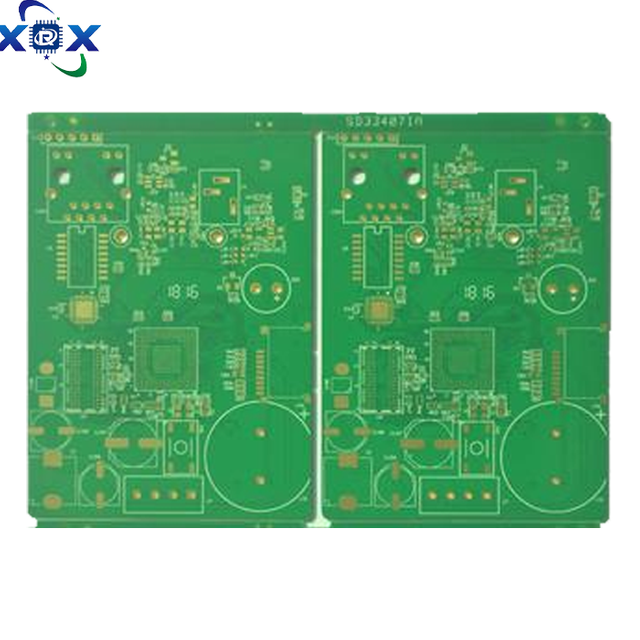
High-power boards often need heatsinks, heat pipes, or TIMs. Heatsinks absorb heat and dissipate it through conduction and convection, while heat pipes transfer thermal energy quickly across the board.
Thermal interface materials—thermal grease, pads, or phase-change materials—reduce resistance between components and heatsinks or metal layers. Combining multiple methods allows efficient cooling for LEDs, motor drivers, or industrial power modules.
Integrated cooling methods improve thermal performance further. Inboard channels guide heat through dedicated vias without requiring large external heatsinks. Forced convection, using fans or liquid cooling, actively removes heat from hotspots.
Combining passive and active methods, such as thermal vias plus heat pipes and inboard channels, ensures consistent thermal management across the PCB. Designers must consider airflow, spacing, and mechanical constraints for optimal results.
Thermal simulation predicts hotspot locations and temperature rise before fabrication. Software tools model heat flow through copper, dielectric, and substrate layers, allowing designers to adjust trace widths, via placement, and material choice.
At Xinrongxing, simulation informs PCB Design decisions to keep components within safe operating temperatures, reducing risk of failure. FEA models help optimize copper planes and internal layers efficiently, saving cost and time in prototyping.
Thermal Interface Materials for PCB Cooling:
TIM Type | Thermal Conductivity | Application Use |
Thermal grease | 0.5 W/m·K | General electronics, flexible layout |
Thermal pad | 1.0 W/m·K | Compact high-power components |
Phase-change material | 5.0 W/m·K | Extreme heat, precision applications |
In high-power PCB Design, the fabrication process significantly affects thermal performance. Substrate preparation ensures clean, flat surfaces for proper lamination and bonding. Lamination presses bond copper to the substrate under precise temperature and pressure, providing consistent heat conduction. CNC drilling creates accurate vias connecting layers, while electroless plating and chemical etching form reliable electrical pathways. Surface finishes like ENIG or HASL not only improve solderability but influence thermal transfer across pads and planes.
Key fabrication steps for thermal efficiency:
● Substrate cleaning and surface prep for uniform bonding
● Lamination under controlled heat and pressure for copper adhesion
● CNC drilling with ±0.1mm precision for vias and through-holes
● Electroless plating and chemical etching for conductive paths
● Surface finishes ENIG/HASL for thermal and electrical performance
Proper mounting and soldering enhance thermal conduction from components into the board. Surface mount technology (SMT) places parts directly on pads, reducing thermal resistance. Through-hole (THT) and SMD techniques provide mechanical support but require careful solder paste volume. Excess paste may lift components, while too little reduces thermal contact. Maintaining proper spacing and edge clearance prevents overheating and ensures airflow around high-power devices.
Mounting and soldering tips:
● Use correct solder paste thickness to maximize heat transfer
● Avoid component floating during reflow
● Maintain at least 1.5 mm edge clearance for high-power devices
● Space high-power ICs and LEDs evenly across the board
Testing validates thermal performance before final deployment. Automated Optical Inspection (AOI) checks alignment, solder quality, and pad coverage, while Flying Probe Testing verifies electrical continuity without custom fixtures. Thermal imaging maps surface temperature across PCBs, highlighting potential hotspots. Thermal cycling exposes boards to repeated temperature swings to ensure structural stability.At Xinrongxing, these quality control steps confirm that each high-power PCB can handle operational heat loads reliably.
Effective thermal management in high-power PCB Design ensures components operate safely and efficiently. Xinrongxing’s PCBs, including aluminum and multilayer boards, provide superior heat dissipation, reliable performance, and customizable solutions that enhance product longevity and operational stability.
A: It involves controlling heat generated by high-power components to prevent failure and maintain performance.
A: Thicker copper traces and planes spread heat efficiently, reducing hotspots and improving electrical stability.
A: They transfer heat from surface components to internal planes, enhancing overall thermal performance.
A: Heatsinks, heat pipes, and thermal interface materials conduct heat away from components to maintain safe temperatures.
A: They provide aluminum and multilayer PCBs with optimized design, fabrication, and quality control for reliable heat dissipation.


