
close
Choose Your Site
Global
Social Media
Views: 0 Author: Site Editor Publish Time: 2026-03-18 Origin: Site
Ever wondered how industrial electronics stay reliable under stress? Industrial PCB Production involves precise fabrication and strict standards. In this article, you will learn key processes, testing methods, and quality measures that ensure long-lasting performance.
Industrial PCB Production is all about making circuit boards that last. Unlike consumer electronics, these boards must withstand extreme temperatures, vibrations, and continuous operation. They’re used in industries like automotive, aerospace, medical devices, and factory automation, where failure isn’t an option. Companies like Xinrongxing specialize in producing these high-performance boards with precise tolerances and customized designs. It isn’t just about connecting components; it’s about ensuring reliability across the entire system.
Key features include:
● Reliability under stress: Designed to survive heat, moisture, and mechanical strain.
● Longevity: Materials and assembly ensure years of consistent operation.
● Scalability: Supports both prototyping and mass production for industrial clients.
● Customization: Adjust copper thickness, layer count, and surface finishes per project.
Industrial PCB production also focuses on quality checkpoints, ensuring every board meets strict standards for electrical and mechanical performance.
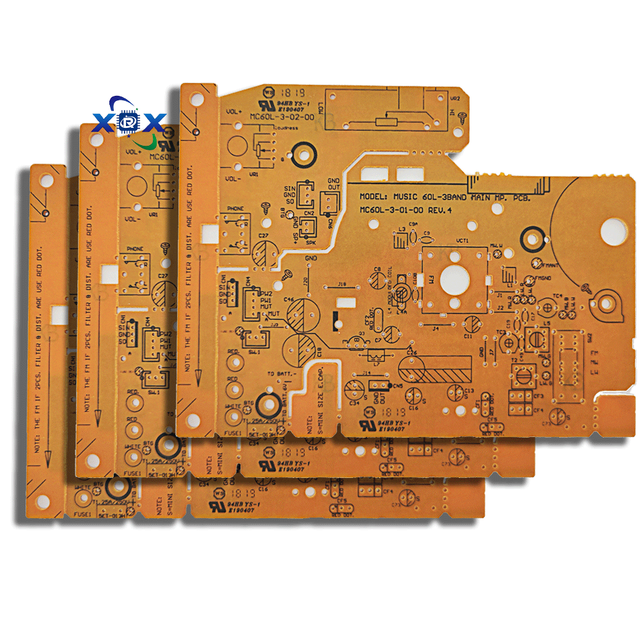
Industrial applications require a range of PCB types, each designed for specific technical challenges:
● Single-sided PCBs:
Simple, cost-effective, ideal for basic controls and sensors.
● Double-sided PCBs:
Supports more complex circuits, better density, used in power supplies and motor controllers.
● Multilayer PCBs:
Handles high-speed signals, dense component layouts, commonly used in industrial computers and automation systems.
● Flexible & Rigid-Flex PCBs
Can bend or fold, perfect for dynamic machinery or tight spaces.
● Aluminum-based PCBs
Excellent for thermal management, critical in LED lighting and high-power electronics.
PCB Type | Features & Advantages | Industrial Use Examples |
Single-sided | Simple, low-cost | Sensors, basic control panels |
Double-sided | Higher density, through-hole connectivity | Motor controllers, power supplies |
Multilayer | HDI, multiple layers | Robotics, telecom modules, industrial PCs |
Flexible / Rigid-Flex | Bendable, space-saving | Wearable devices, robotic arms |
Aluminum-based | Superior heat dissipation | LEDs, high-power modules |
This diversity ensures each industrial need—from high-heat applications to flexible assemblies—is properly supported. Boards often undergo custom testing and IPC standard verification before deployment.
Material choice is critical for performance and durability. Common materials include:
● FR-4: Standard for multilayer boards, balances strength and insulation.
● Aluminum: Great for thermal conductivity, prevents overheating.
● Flexible polymers: Maintain trace integrity during bending or motion.
● CEM series: Cost-effective option where moderate performance suffices.
Key material properties affecting industrial PCBs:
● Dielectric Constant (Dk): Affects signal speed and impedance control.
● Glass Transition Temperature (Tg): Determines heat tolerance of the PCB.
● Coefficient of Thermal Expansion (CTE): Must match components to reduce stress.
Using the right material ensures that industrial PCBs can operate continuously, maintain signal integrity, and handle mechanical or thermal stress without failure.
Industrial PCB production begins with substrate preparation, where raw materials like FR-4, aluminum, or flexible polymers are cleaned, cut, and prepped for lamination. This step ensures perfect adhesion of copper layers and uniform thickness across the board. Lamination quality is critical for multilayer PCBs, as any misalignment can cause signal interference or mechanical stress later.
Benefits:
● Enhances mechanical stability
● Ensures electrical continuity across layers
● Reduces production defects in complex boards
Once laminated, boards undergo circuit patterning and etching to define copper traces and pads. This process uses photoresist and UV exposure to protect intended pathways, followed by chemical etching to remove excess copper. Precision here is vital for signal integrity, especially in high-speed or high-density industrial boards.
Drilling creates mechanical and electrical pathways, connecting layers through vias. Vias can be through-hole, blind, or buried, depending on the board’s complexity. Plating techniques then coat the drilled holes with copper to ensure conductivity and durability.
Via Type | Description | Typical Use |
Through-Hole | Connects all layers, visible top to bottom | Power boards, connectors |
Blind | Connects outer layer to inner layers | HDI boards, compact electronics |
Buried | Connects only inner layers, hidden externally | Multilayer industrial boards |
After via formation, boards receive surface finishes and protective coatings. Options include ENIG, HASL, and OSP, chosen based on thermal and soldering requirements. Solder masks protect traces and prevent accidental shorting, while silkscreen printing labels components for assembly and testing.
● ENIG (Electroless Nickel/Immersion Gold): Excellent for fine-pitch components
● HASL (Hot Air Solder Leveling): Cost-effective, reliable for most industrial applications
● OSP (Organic Solderability Preservative): Environmentally friendly, suitable for lead-free assembly
Industrial PCB Production must meet strict global quality standards to ensure reliability in demanding environments. Standards such as ISO 9001, IPC-A-600, IPC-6012, and RoHS compliance guide every stage of manufacturing.
ISO 9001 ensures consistent quality management, while IPC standards define acceptability criteria for PCB fabrication. RoHS compliance guarantees the use of environmentally safe materials. Adhering to these standards is critical for industrial applications where boards face high temperatures, electrical loads, and long service life.
Companies like Xinrongxing integrate these guidelines into their production, combining rigorous inspection and certified processes.
Key points about international standards:
● ISO 9001
Ensures systematic quality management and continuous improvement.
● IPC-A-600 / IPC-6012
Provides clear acceptability criteria for finished boards and multilayer assemblies.
● RoHS compliance
Restricts hazardous substances, supporting safer industrial electronics.
● Industrial reliability
Following these standards reduces failure rates and operational risk.
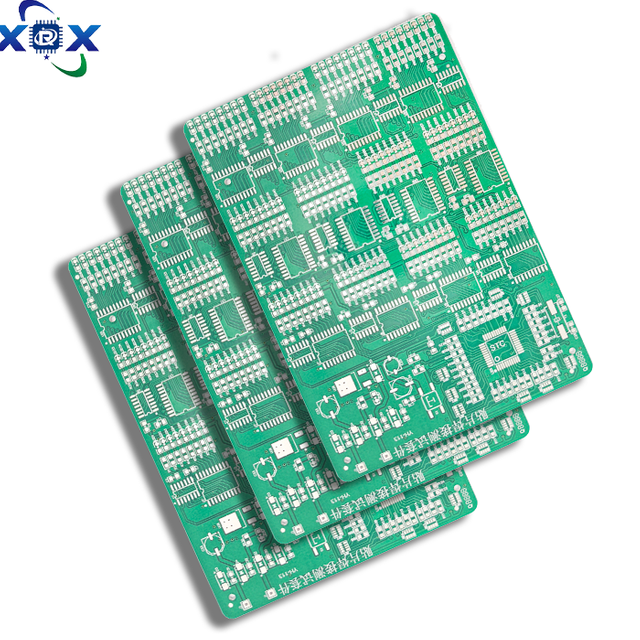
Testing is vital in Industrial PCB Production. Boards are examined at multiple stages to detect defects and confirm performance. Automated Optical Inspection (AOI) scans boards for trace integrity, shorts, and misalignments. X-ray inspection evaluates internal vias and multilayer connections. Electrical continuity testing ensures proper circuit paths, while functional and burn-in tests simulate real-world operational stresses.
● AOI inspection: Quickly detects missing pads, breaks, or soldering errors.
● X-ray analysis: Identifies hidden defects in buried or blind vias.
● Electrical testing: Confirms connectivity and verifies signal integrity.
● Burn-in testing: Boards operate under elevated temperature and load, simulating long-term industrial use.
They often combine these inspections into automated production lines, reducing human error and improving consistency.
The lifespan of industrial PCBs depends on thermal cycling, vibration, and mechanical stress. Designers consider board material, trace width, and component placement to mitigate failure risks. Lamination, plating, and surface finishes contribute to mechanical and thermal stability, while careful layout design prevents hot spots. Testing methods complement design, ensuring boards survive harsh industrial conditions.
Reliability Factor | Mitigation Measures | Industrial Benefit |
Thermal cycling | High-Tg materials, thermal vias | Prevents warping and delamination |
Mechanical vibration | Reinforced mounting, flexible materials | Maintains solder and component stability |
Electrical stress | Adequate copper weight, optimized traces | Reduces overheating, improves signal |
Environmental exposure | Protective coatings, RoHS materials | Prevents corrosion and chemical damage |
Rapid prototyping plays a critical role in Industrial PCB Production. It allows engineers to test designs early, catching errors before full-scale manufacturing begins. Prototypes give insight into mechanical fit, trace integrity, and thermal performance, helping avoid costly redesigns. They are especially valuable when working with multilayer boards or high-density interconnects, where small mistakes can cause major failures.
Key benefits of prototyping:
●Design Validation
Prototypes confirm that the board layout and component placement meet functional requirements. Engineers can adjust traces, pad sizes, and vias before committing to volume production.
●Error Reduction
Early testing identifies potential faults such as short circuits, misaligned components, or thermal hotspots. Correcting issues in the prototype stage saves time and cost.
●Accelerated Development
Using rapid prototypes, teams can iterate designs faster, shortening product development cycles. This is particularly helpful for custom industrial applications that require tight tolerances.
Turnkey PCB Assembly provides a complete solution, from component sourcing to final testing. It includes SMT (Surface-Mount Technology) and THT (Through-Hole Technology) assembly, ensuring all components are correctly mounted and functional.
Industrial PCBs often demand precise placement of high-density components, and turnkey assembly ensures consistent quality across every board.
Key aspects of PCBA:
●SMT and THT Processes
SMT places components on the surface, while THT handles through-hole parts. Together, they support complex industrial designs and high-reliability assemblies.
●Component Sourcing
Sourcing from authorized distributors ensures components meet industrial-grade specifications, reducing the risk of failure.
●Functional Testing
Boards undergo electrical tests, burn-in, and functional checks to verify performance under industrial operating conditions.
Industrial PCB Production must scale efficiently from a single prototype to thousands of units. Managing different order volumes requires robust supply chains and production planning, ensuring consistent quality without delays.
Manufacturers like Xinrongxing handle this by combining modular assembly lines with flexible logistics, adapting to both small and large orders.
Production Stage | Key Focus Areas | Benefits for Industrial PCB Production |
Prototype | Design verification, functional testing | Early error detection, faster iteration |
Low-Volume Production | Consistent assembly, targeted testing | Smooth transition from prototype to scale |
Mass Production | Supply chain management, quality assurance | High-volume efficiency with reliable quality |
Additional considerations:
●Order Flexibility
Industrial PCBs may vary in layer count, substrate type, or finish. Manufacturers adjust process parameters for each order size.
●Supply Chain Reliability
Ensures on-time delivery, with raw materials and components ready for production.
●Quality Consistency
Even at scale, each board is tested against strict industrial standards, maintaining signal integrity, thermal performance, and mechanical reliability.
By integrating rapid prototyping, turnkey assembly, and scalable production, Industrial PCB Production can meet complex industrial requirements efficiently, reducing errors while ensuring high reliability.
Industrial PCB Production combines precise manufacturing, rigorous quality standards, and thorough testing to ensure reliability and performance. Xinrongxing delivers single-sided, multilayer, flexible, and aluminum PCBs, along with turnkey assembly and prototyping services. Their boards withstand thermal, mechanical, and electrical stress, providing long-lasting solutions for industrial applications while supporting scalable production from prototype to mass orders.
A: It is the manufacturing of reliable circuit boards for industrial use, including multilayer, flexible, and aluminum designs.
A: They ensure boards meet reliability, thermal, and mechanical requirements for industrial applications.
A: Prototypes validate design, catch errors early, and accelerate product development.
A: SMT and THT assembly, component sourcing, and functional testing ensure complete, reliable boards.
A: Yes, manufacturers like Xinrongxing support prototypes, low-volume, and large-scale orders while maintaining quality.


