
close
Choose Your Site
Global
Social Media
Views: 0 Author: Site Editor Publish Time: 2026-03-18 Origin: Site
Ever wondered how a single supplier can handle everything in PCB assembly? PCB Manufacturing Services integrate design, fabrication, and testing. In this article, you will learn how one-stop solutions save time, reduce errors, and ensure reliable boards.
PCB assembly, or PCBA, is the process of mounting and soldering components onto a printed circuit board. It transforms bare boards into functional electronic circuits ready for use in devices.
At Xinrongxing, they produce boards ranging from single-sided to multilayer configurations, ensuring every component fits precisely. The materials used in assembly include substrates like FR4 or aluminum for heat dissipation, copper layers that carry current, solder resist to prevent unintended connections, and screen printing for component identification. Common components integrated into PCBs include resistors, capacitors, ICs, connectors, and sometimes LEDs for visual indicators.
● Substrate: Provides mechanical support and insulation between conductive layers.
● Copper: Ensures electrical connectivity and thermal management.
● Solder resist: Protects circuits from short-circuiting and corrosion.
● Screen printing: Marks component placement, logos, and test points.
Component | Purpose | Typical Use |
Resistors | Control current flow | Signal conditioning |
Capacitors | Store energy | Filtering, decoupling |
ICs | Perform logic and computation | Processors, memory |
Connectors | Enable modular connections | Power and signal interfacing |
There are three main assembly approaches Xinrongxing uses: SMT, THT, and hybrid assembly. Each has advantages depending on board complexity, component size, and production requirements.
● Surface Mount Technology (SMT)
Surface Mount Technology (SMT) involves placing components directly onto the board's surface using automated pick-and-place machines. It allows high-density placement, faster production, and smaller boards, ideal for modern electronics. Reflow soldering ensures components bond securely, passing through ovens that melt the solder paste and solidify it into strong joints.
● Through-Hole Technology (THT)
Through-Hole Technology (THT) requires inserting components through pre-drilled holes. It's preferred for larger or heavier parts, providing strong mechanical bonds. THT assembly includes manual insertion or automated wave soldering, where a molten solder wave attaches all leads simultaneously.
● Hybrid Assembly
Hybrid Assembly combines SMT and THT on the same board. This approach offers design flexibility, letting engineers optimize placement for both small and large components. It is especially useful for boards requiring varied mechanical strength and dense layouts.
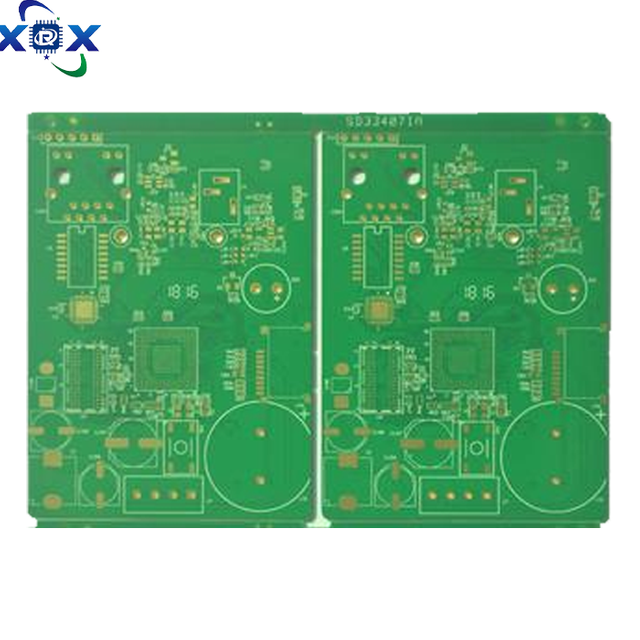
A one-stop PCB supplier handles everything from design, fabrication, component sourcing, assembly, to testing. This integration removes the need to coordinate multiple vendors. They streamline communication, reduce delays, and help projects stay on schedule. At Xinrongxing, customers experience seamless workflows where engineers, production staff, and quality teams work together. Lead times shorten because all stages occur under one roof, improving efficiency and consistency.
● Integrated Workflow: Design → Fabrication → Assembly → Testing.
● Simplified Communication: One contact for all production stages.
● Time Efficiency: Faster prototypes and production runs.
Process Stage | Description | Benefit |
Design | Schematic capture, layout, DFM analysis | Optimized boards, fewer errors |
Fabrication | Single-sided, multilayer, aluminum boards | Reliable, precise manufacturing |
Assembly | SMT, THT, hybrid methods | Faster production, flexible solutions |
Testing | AOI, X-ray, functional tests | Ensures quality, reliability |
Xinrongxing offers strong design support that begins with consultation on PCB layout and manufacturability. Engineers provide guidance on DFM analysis, schematic capture, and material selection to match the product application. Rapid prototyping enables clients to test concepts quickly and adjust designs before committing to full production. Small-batch production is also supported, which helps startups or specialized applications get high-quality boards without large initial investment.
● Design Consultation: Feedback on layouts and material choice.
● DFM Analysis: Identifies potential manufacturing issues early.
● Prototyping: Quick iterations to validate product ideas.
● Small-Batch Production: Economical for low-volume projects.
Managing components is critical for consistent PCB Manufacturing Services. Xinrongxing ensures that every part is quality-checked and readily available. They provide alternatives for obsolete or hard-to-find components to prevent delays. Inventory is managed efficiently using just-in-time delivery, reducing storage costs and supply chain complications. Customers gain confidence that each assembly will meet specifications without compromising timeline or quality.
● Quality Assurance: Every component verified before use.
● Availability: Reliable stock, alternatives provided.
● Just-In-Time Delivery: Minimizes holding costs, prevents production delays.
● Supply Chain Simplification: One supplier manages sourcing and inventory.
This one-stop model allows Xinrongxing to provide PCB Manufacturing Services that are fast, reliable, and flexible, supporting a wide range of project scales and industry applications.
Before assembly, boards undergo careful preparation to ensure every component sits perfectly. Xinrongxing starts by applying solder paste using precise stencils, creating exact pads for each part. Automated machines plan component placement to match design files, reducing errors and improving efficiency.
Meanwhile, technicians set up pick-and-place equipment and conveyors for both SMT and THT processes. Proper preparation guarantees consistent soldering, minimizes defects, and accelerates production timelines.
● Stencil Printing: Accurate solder paste application to board pads.
● Placement Planning: Automation programs ensure components align properly.
● Equipment Setup: SMT and THT machines configured for production runs.
Step | Purpose | Outcome |
Stencil Printing | Apply solder paste | Precise solder pads |
Pick-and-Place | Position components | Correct orientation & alignment |
Machine Calibration | Setup conveyor and feeders | Smooth production flow |
Surface Mount Technology (SMT) allows tiny components to be mounted directly on the PCB surface. Components are placed by robots, then reflow soldered in ovens reaching precise temperatures to melt and solidify solder. Through-Hole Technology (THT) handles heavier parts, either inserted manually or using wave soldering for faster, uniform soldering.
Xinrongxing combines these methods for hybrid boards, achieving flexibility without sacrificing speed or accuracy. Each stage is monitored, and adjustments made to prevent misalignment or defects.
● SMT Reflow: Automated placement, precise heating, controlled cooling.
● THT Wave Soldering: Leads submerged in molten solder, fast coverage.
● Hybrid Boards: SMT top layer, THT bottom or mixed for robust designs.
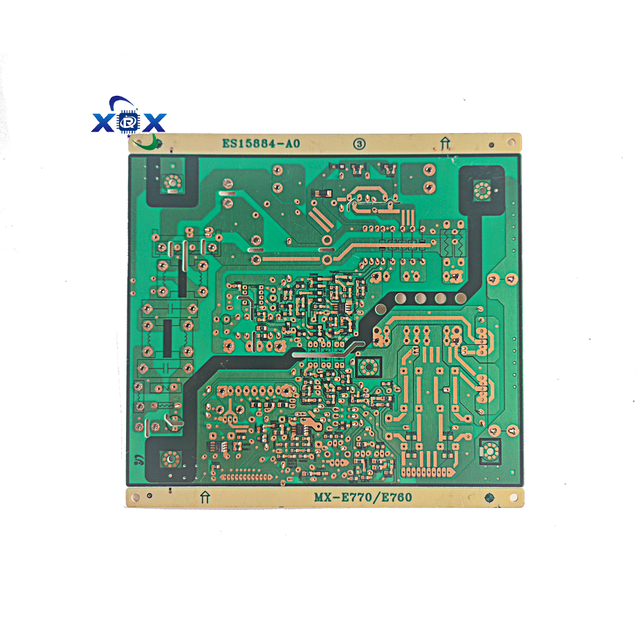
Quality assurance ensures each PCB works reliably. Xinrongxing uses Automated Optical Inspection (AOI) to detect misplaced components or solder bridges, while X-ray systems verify hidden joints in multilayer boards. Functional tests simulate real operating conditions, confirming signal integrity and performance. Environmental stress screening subjects boards to temperature and humidity cycles to check durability. These combined inspections guarantee compliance with international standards, reducing returns and improving confidence in PCB Manufacturing Services.
● AOI: Fast visual defect detection, high precision.
● X-ray Inspection: Checks solder under components and internal layers.
● Functional & Stress Testing: Confirms performance and longevity.
Selecting the right PCB Assembly Services requires careful evaluation of multiple aspects. Project size plays a key role—prototypes demand rapid turnaround, small batches need flexibility, and high-volume runs must maintain consistent quality. Each type of project introduces different demands on assembly methods and resource allocation.
● Board complexity
Board complexity is another critical factor. Multilayer designs, tightly spaced traces, and high-density layouts may require hybrid assembly approaches. These considerations influence how SMT and THT methods are combined to optimize performance, reliability, and manufacturability.
● Component types
Component types also dictate assembly strategy. Standard resistors and capacitors are easier to place, while heavy connectors, large ICs, or specialized components may require additional support or THT insertion. Mechanical requirements, such as vibration resistance and thermal dissipation, further guide the choice of assembly method.
Quality assurance is central to professional PCB Manufacturing Services. Xinrongxing maintains ISO 9001:2015 certification, which guarantees standardized processes across design, fabrication, and assembly.
RoHS compliance ensures that all materials meet environmental safety standards, while industry benchmarks like IPC-A-610 verify workmanship quality. During production, in-process inspections, including Automated Optical Inspection (AOI), X-ray imaging, and functional testing, catch defects early. This comprehensive QA approach ensures boards meet strict performance and reliability requirements even for complex applications.
Cost efficiency and lead time often determine the supplier choice. One-stop PCB Manufacturing Services, such as those offered by Xinrongxing, consolidate design, fabrication, assembly, and testing under a single supplier.
This integrated workflow reduces total project cost by eliminating delays caused by coordinating multiple vendors. Lead times are shortened because boards move directly from fabrication to assembly without additional handoffs. The streamlined process minimizes errors and allows both prototypes and large-scale production runs to be delivered on time while maintaining consistent quality.
Xinrongxing delivers integrated PCB Manufacturing Services that combine design, fabrication, and assembly. Their boards, from prototypes to high-volume runs, ensure reliability, quality, and efficient production, providing clear value to customers.
A: PCB Manufacturing Services include design, fabrication, assembly, and testing of printed circuit boards for reliable electronic devices.
A: A one-stop supplier like Xinrongxing streamlines production, reducing lead times and ensuring consistent quality across all boards.
A: Xinrongxing handles single-sided, double-sided, multilayer, and hybrid PCBs using SMT, THT, or combined methods.
A: Certifications such as ISO 9001 and RoHS guarantee quality, environmental safety, and compliance for all manufactured boards.
A: Yes, Xinrongxing offers rapid prototyping and small-batch PCB Manufacturing Services, allowing flexible, cost-effective solutions.


