
close
Choose Your Site
Global
Social Media
Views: 0 Author: Site Editor Publish Time: 2026-03-18 Origin: Site
Ever wondered how electronics stay reliable at scale? PCB Manufacturing enables mass production of boards for complex devices. In this article, you’ll learn the benefits, processes, and applications of high-volume PCB Manufacturing.
Producing PCBs in bulk dramatically lowers the cost per unit. When manufacturers order thousands of boards at once, material costs drop, and setup expenses spread across the entire production batch.
● Benefits of High-Volume PCB Manufacturing:
○ Bulk material procurement lowers prices.
○ Fewer machine setups save time and labor.
○ Consistent production reduces errors and scrap.
Factor | Low-Volume PCB | High-Volume PCB | Advantage |
Unit Cost | High | Low | Economies of scale |
Setup Time | Short | Longer | Offset by batch efficiency |
Material Waste | Moderate | Minimal | Optimized procurement |
Automation drives consistency in high-volume PCB Manufacturing. Machines handle repetitive tasks such as solder paste application, component placement, and reflow soldering with unmatched precision. This reduces defects, misaligned components, and soldering failures.
● Quality Control Advantages:
○ Standardized production processes ensure uniformity.
○ ISO9001-certified quality management maintains high standards.
○ RoHS compliance ensures environmentally safe and reliable boards.
High-volume PCB Manufacturing accelerates product launches. Automated lines allow large batches to be produced continuously, cutting weeks off delivery times. It helps companies meet market demand, especially during peak production cycles or when launching new consumer electronics.
● Time-to-Market Highlights:
○ Rapid production of hundreds or thousands of boards.
○ Reduced human intervention speeds up the process.
○ Xinrongxing’s workflow ensures predictable and on-time delivery.
They also offer flexible scheduling, letting clients adjust production runs for urgent requirements. With their high-throughput machinery and well-trained engineering team, boards move seamlessly from design to finished product. Faster time-to-market helps businesses stay competitive, meet global demand, and reduce delays.
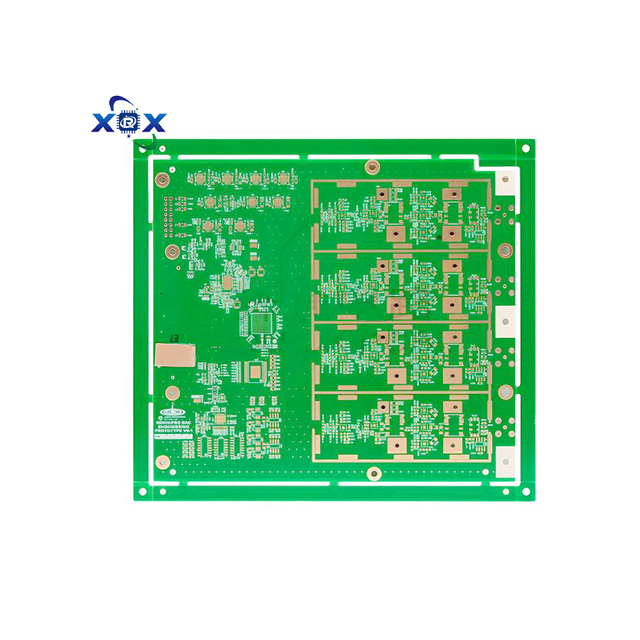
Applying solder paste precisely is crucial for high-volume PCB Manufacturing. Stencil printing remains a popular method because it delivers exact amounts across thousands of boards consistently.
Jet printing, on the other hand, offers flexibility for changing designs rapidly, avoiding the need to produce new stencils each time. Automation in solder paste application reduces human error, speeds up production, and ensures that solder is consistently deposited for every pad. This results in stronger joints, fewer defects, and higher overall efficiency.
Method | Advantage | Best Use Case |
Stencil Printing | Accuracy, repeatability | High-volume production with stable designs |
Jet Printing | Design flexibility | Frequent design changes, prototypes |
Once solder paste is applied, components must be placed quickly and accurately. Pick-and-place machines perform this task at high speed, using robotic systems to handle thousands of parts per hour.
Xinrongxing’s technical expertise ensures each component is positioned precisely, even on dense or complex boards, reducing misalignment and soldering errors. Their engineers monitor the machines, tweak programs as needed, and make sure high-volume orders maintain peak quality and efficiency.
● Advantages of Automation:
○ Consistency across large batches.
○ Minimal human error in component placement.
○ Optimized throughput for high-volume orders.
After component placement, boards move to reflow ovens where solder paste melts and solidifies to form reliable electrical joints. Precise temperature control ensures components are securely attached without damage. Automated inspection tools like AOI, ICT, and flying probe testing identify defects early. By catching misplacements, solder bridges, or open circuits immediately,
● Inspection Techniques:
○ AOI (Automated Optical Inspection) for visual defect detection.
○ ICT (In-Circuit Testing) for electrical functionality.
○ Functional testing for system-level verification.
High-volume PCB Manufacturing often includes full assembly services, creating finished PCBA ready for integration.
Xinrongxing offers end-to-end assembly, including both surface-mount and through-hole components, supporting complex designs for industrial, consumer, and commercial applications. Their workflow integrates quality checks at every stage, ensuring boards not only function correctly but also meet client specifications for high-volume orders.
High-volume PCB Manufacturing underpins nearly all modern consumer electronics. Smartphones, laptops, tablets, and wearable devices rely on PCBs that can handle dense circuitry and high-speed signal transmissions without failure. Producing these boards at scale allows manufacturers to meet global demand efficiently, maintain consistent quality, and reduce per-unit costs.
Xinrongxing specializes in high-volume PCB production, ensuring boards are precise, reliable, and ready for integration into both simple and complex consumer devices. Automated assembly and testing ensure every batch meets stringent specifications, enabling rapid product launches and consistent market supply.
● Large-scale production helps prevent bottlenecks during seasonal demand spikes.
● Consistent manufacturing reduces defects and improves customer satisfaction.
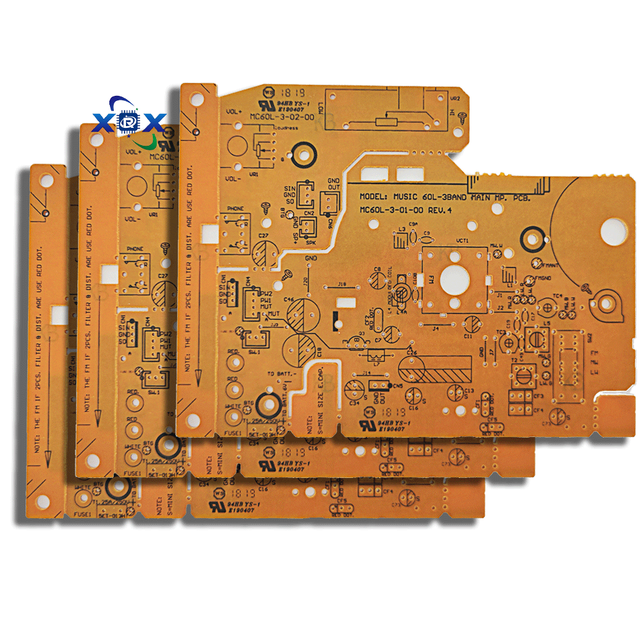
Industrial applications such as robotics, control systems, and IoT devices depend heavily on high-quality PCBs for performance and reliability. Boards must endure harsh operating conditions, continuous workloads, and complex routing requirements.
Xinrongxing offers multi-layer and flexible PCB solutions that cater to these industrial needs. Their automated high-volume lines enable precise component placement, reliable signal integrity, and robust electrical performance across thousands of units. This allows businesses to deploy devices confidently, knowing the PCBs will maintain functionality over extended periods.
● Multi-layer boards provide superior signal routing for complex industrial systems.
● Flexible PCBs allow integration in compact and dynamic machinery designs.
LED and specialty PCBs require effective thermal management and precise electrical characteristics to operate efficiently in high-volume applications. Aluminum-core substrates and high-conductivity materials dissipate heat effectively, preventing component failure and extending lifespan.
High-volume manufacturing ensures these boards are produced consistently, meeting the rigorous demands of automotive lighting, commercial displays, and industrial illumination.
The evolution of electronics has increased demand for advanced PCB designs such as HDI (High-Density Interconnect), flexible PCBs, and miniaturized circuits. These require high-volume PCB Manufacturing for cost efficiency and consistent quality. Precision, material selection, and optimized automated assembly are critical for ensuring performance in compact devices.
● HDI and flexible PCBs allow complex, space-saving designs.
● High-volume manufacturing ensures timely delivery of cutting-edge technologies.
● Eco-conscious production reduces waste and energy consumption while maintaining quality.
Selecting the right partner is one of the most critical decisions in high-volume PCB Manufacturing. Experience matters because scaling production without sacrificing quality requires advanced machinery, skilled technicians, and well-defined processes. Xinrongxing brings decades of expertise and a global production footprint to every project, ensuring that even the most complex PCB orders are handled efficiently.
Their automated production lines can process thousands of boards while maintaining consistent quality. The technical team provides guidance on optimizing designs for high-volume assembly. Working with an experienced partner reduces the risk of errors, prevents costly delays, and ensures delivery schedules are met reliably.
● Benefits of partnering with experienced manufacturers:
○ Consistent quality across large batches.
○ Predictable lead times and project planning.
○ Guidance on design optimization for mass production.
Efficient design practices are essential when preparing PCBs for mass production. DFM and DFT principles focus on optimizing layouts, component placement, and testing strategies to minimize assembly errors. Xinrongxing works closely with clients to review designs, suggesting adjustments that improve yield and reduce potential rework.
For example, adjusting trace widths or component spacing prevents soldering defects and allows automated machinery to operate at peak efficiency. Incorporating testability features early ensures that each board can be verified quickly, reducing downtime in high-volume runs. These measures result in a final product that is reliable, cost-effective, and ready for seamless large-scale manufacturing.
● Key advantages of DFM/DFT in high-volume production:
○ Reduced defects and fewer rework cycles.
○ Faster production due to optimized layouts.
○ Enhanced overall yield and reliability.
In high-volume PCB Manufacturing, sourcing components and managing inventory are as important as the assembly itself. Delays in parts procurement can halt production and increase costs, while poor inventory planning may lead to overstock or shortages. Xinrongxing addresses these challenges by maintaining a coordinated global supplier network and integrated logistics management.
Their team oversees component sourcing, shipment scheduling, and inventory tracking to ensure every batch of PCBs is produced on time. By synchronizing supply chain operations with production schedules, clients avoid costly interruptions and achieve smooth large-scale manufacturing. Strategic planning allows both standard and customized boards to flow seamlessly through the production line.
Before full-scale production, performing First Article Inspection (FAI) is essential. FAI verifies that initial boards meet design specifications and helps identify defects early to avoid expensive rework. Xinrongxing integrates FAI into their quality system, combining automated optical inspection, functional testing, and rigorous audits.
This approach ensures every board in high-volume runs meets electrical, mechanical, and thermal performance standards. Continuous monitoring and process optimization maintain uniform quality across thousands of units.
● Benefits of FAI and QA in high-volume PCB Manufacturing:
○ Early detection prevents propagation of defects.
○ Ensures boards meet design specifications consistently.
○ Improves reliability for industrial, consumer, and specialized applications.
High-volume PCB Manufacturing enhances efficiency, reduces costs, and ensures consistent quality. Xinrongxing provides reliable multi-layer and flexible PCBs, supporting industrial, consumer, and specialized applications while delivering scalable production and precise assembly services.
A: It is the mass production of printed circuit boards for large-scale applications, ensuring efficiency and uniform quality.
A: It allows rapid assembly and consistent performance for devices like smartphones and laptops.
A: Xinrongxing offers expertise, multi-layer and flexible PCBs, and reliable high-volume production services.
A: It provides robust, durable boards suitable for robotics, IoT, and control systems.
A: Techniques include automated inspection, first article verification, and adherence to ISO standards.


