
close
Choose Your Site
Global
Social Media
Views: 0 Author: Site Editor Publish Time: 2025-09-29 Origin: Site
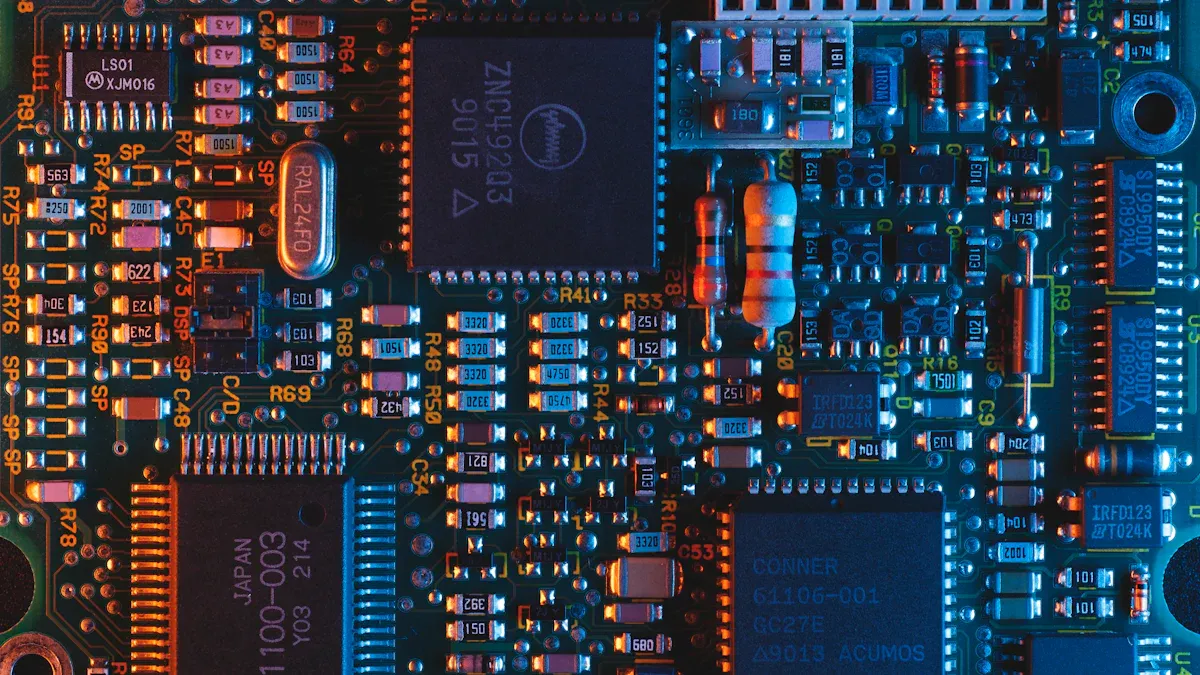
When you look at a pcb board, you will see three main types of pcb components. These are active, passive, and electromechanical. These important parts are the base of every printed circuit board. Each one has a special job in how a pcb works. For example, resistors, capacitors, and inductors help control how energy moves. Diodes and transistors help control signals. If you learn about these parts, you will know why they matter for your circuits. They help make sure your circuits work well and last long.
PCBs have three main types of parts. These are active, passive, and electromechanical. Each type is important for how the board works.
Active components include transistors and diodes. They need power to work. They control signals and make them stronger. This helps devices work better.
Passive components are things like resistors and capacitors. They do not need extra power. They help control energy flow. They also protect circuits from harm.
Electromechanical components link electrical systems to mechanical ones. They help devices move. They also help switch signals.
Picking a good PCB maker, like Xinrongxing, is important. It gives you high-quality parts. This means your devices work better.
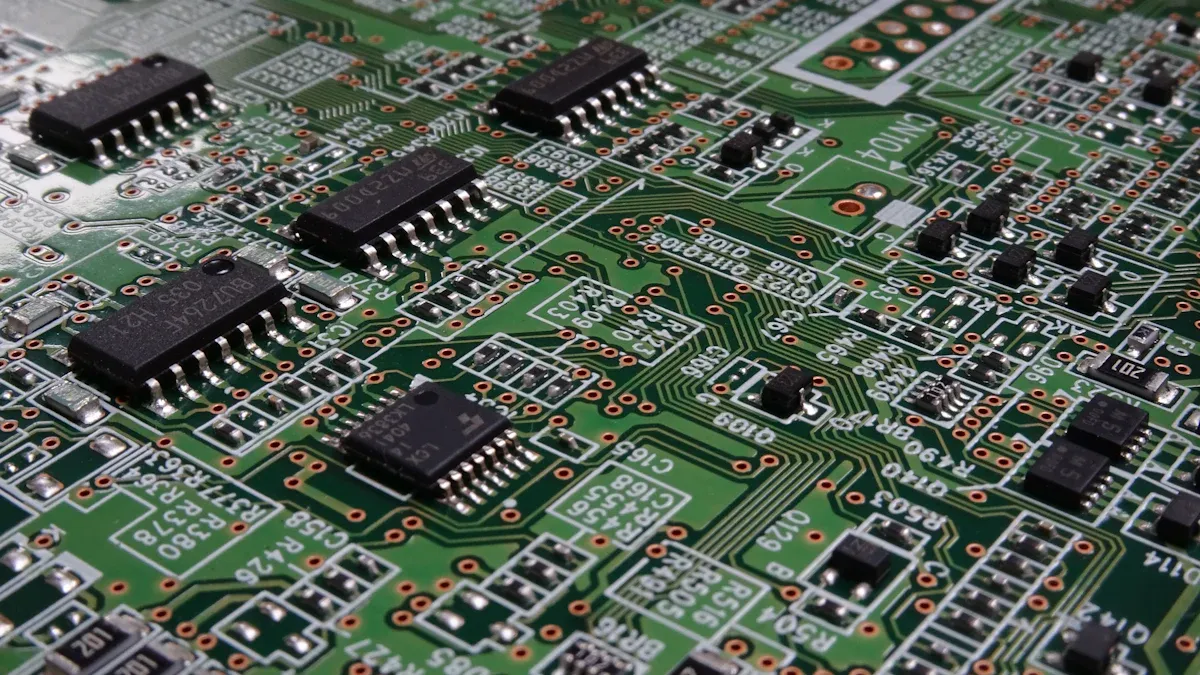
When you look at a printed circuit board, you will see three main groups of pcb components. These are active, passive, and electromechanical components. Each group has its own job in making your pcb board work. You should learn about these important components to know how they help your devices work well.
Here is a table that shows how each type is different:
Component Type | Characteristics | Examples |
|---|---|---|
Active Components | Need extra energy, can make signals stronger, control how current moves | Transistor, Diode, IC, Vacuum Tube |
Passive Components | Work without extra power, cannot make signals stronger or control them | Resistors, Capacitors, Inductors |
Electromechanical | Connect electrical and mechanical parts, allow movement or switching | Relays, Switches, Connectors |
You will see these important pcb components on almost every pcb. They are the main parts of all electronic devices.
You can find many kinds of pcb components on a board. Some control signals. Some store energy. Others connect different parts together. As technology gets better, you will see new ways to use and place these components:
Embedded component technology puts parts inside the layers of the pcb. This makes devices smaller and helps them work better.
System-in-Package (SiP) technology puts many chips in one package. This makes devices small and strong.
Picking the right materials, like FR4 or polyimide, changes cost and performance.
Choosing good and easy-to-find components keeps costs low and helps your device work well.
Note: Xinrongxing is a top company that makes high-quality printed circuit boards. You can trust their skill in putting all important pcb components together, from design to assembly. Their experience makes sure your board meets strict rules and works well.
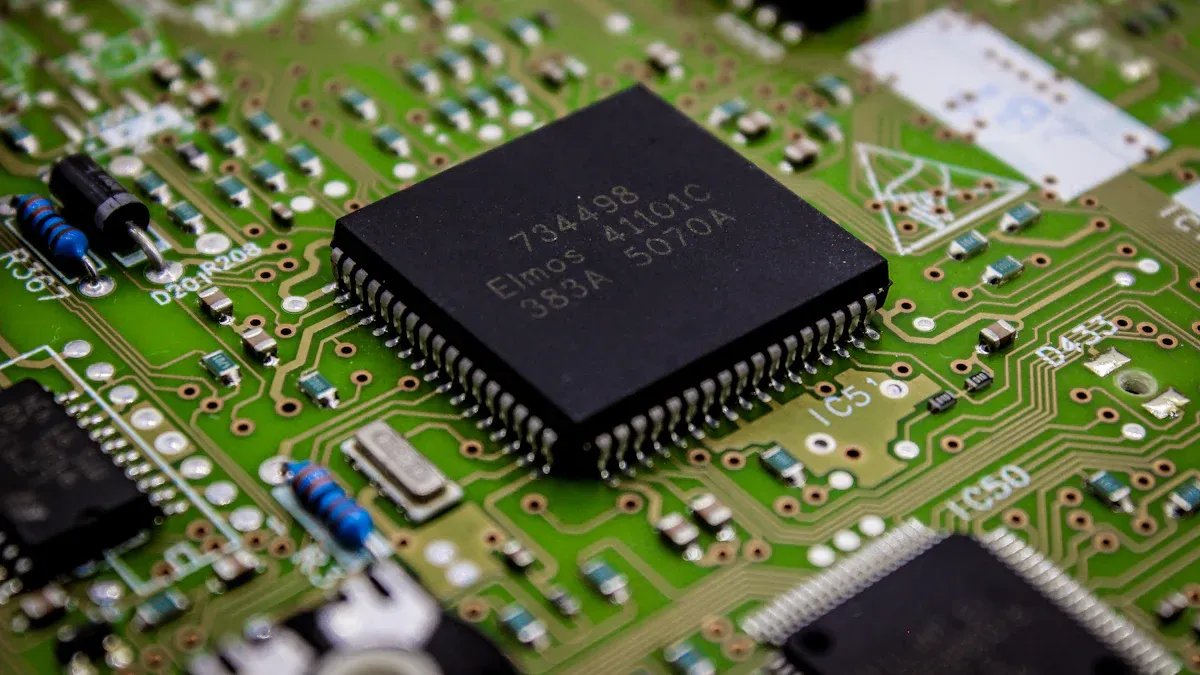
Active components are found in every pcb board. These electrical parts need power to work. They can control signals. They can make signals stronger. They can switch signals on and off. Transistors and integrated circuits (ICs) are common active components. These parts do more than just connect wires. They help your devices think and work better.
Here is a table that shows how some pcb components work:
Component | Function | Type |
|---|---|---|
Diode | Impedes flow of current directionally | Passive |
Transistor | Amplifies or switches signals and power | Active |
Transistors can make weak signals stronger. They can also act as switches. ICs have many transistors and other parts inside. They do hard jobs for your devices. You will find these important components in almost every new device.
Active components are important for pcb boards. They help control and make signals stronger. They let your devices handle information. They help store data. They help your devices talk to each other.
Transistors can make signals louder. A small current can control a bigger current.
Transistors can be used as switches. They turn parts of the circuit on or off.
Integrated circuits have many electrical parts. They do big jobs like running microprocessors or memory chips.
Active components can add energy to a circuit. This helps make weak signals stronger. It does not change the signal much. You see this in audio systems and wireless devices. These jobs are important for your devices to work well.
You need active components to change DC power from outside into a stronger shape. They help your pcb board handle signals and power. This makes your devices faster and more dependable.
New technology has made active components better. HDI technology lets you put more parts on small boards. Flexible PCBs can bend and twist. Embedded components help devices work better and lose less signal. Materials like Rogers and Teflon help with heat and keep signals clear. SiP technology puts many ICs and passive parts in one package. 3D printing helps make special shapes fast.
You want your pcb to last and work well. Xinrongxing checks all components carefully. The company follows rules like IPC-A-600, IPC-6012, IPC-A-610, and IPC-2221. These rules make sure your pcb board is strong and works well. Xinrongxing picks the best materials and checks every step. You get a pcb board that works the way you want.
Tip: If you pick a pcb board from Xinrongxing, you get strong active components. These help your devices work smoothly. Their skill in building and testing makes sure your electrical parts work together for the best results.
Passive components are found on every printed circuit board. These electrical components work without extra power. They cannot make signals stronger or control them like active parts. They help manage energy in your circuits. You use them to store, control, or remove energy.
Some common passive components you will see on a pcb board are:
Resistor: Adds resistance to a circuit. It blocks or limits current flow. There are fixed resistors, variable resistors, thermistors, and potentiometers.
Capacitor: Stores electrical energy and releases it when needed. Types include ceramic, electrolytic, film, and paper capacitors.
Inductor: Stores energy in a magnetic field. It helps filter signals and smooth current.
Fuse: Protects your circuit from too much current. It breaks the circuit if the current gets too high.
Potentiometer: Lets you change the flow of current in a circuit.
Connector: Joins different components or boards together.
These electrical components are important for how pcb components work together. Each one has a special job that helps your devices run well.
You need to know what pcb components do to understand your devices. Passive components help control, store, and release energy. They also protect your circuits from harm. Here is a table that shows how the main passive components work in a pcb:
Component | Role in Energy Regulation, Storage, and Dissipation |
|---|---|
Resistors | Control current flow and turn energy into heat. |
Capacitors | Store and release energy, smooth voltage changes, and filter signals. |
Inductors | Store energy in a magnetic field and stop changes in current. |
Each part has a clear job. Resistors keep current safe. Capacitors hold and release energy when needed. Inductors help keep signals clean and steady.
The quality of materials for passive components is very important. Good materials help electricity move better. This makes your circuit board work well and last longer. Good heat control stops overheating and keeps your pcb safe. Materials that resist corrosion protect your circuits in tough places.
Xinrongxing uses the best materials for passive components. You get circuit boards that work well in many places. The company uses advanced ways to make sure every part is strong. Here are some methods used:
Technique | Description |
|---|---|
Laser Drilling | Makes small, exact holes for complex designs and many layers. |
High-Temperature Laminates | Handle very hot temperatures, good for aerospace and tough jobs. |
Flex and Rigid-Flex PCBs | Can bend and fold, great for devices with little space. |
These advanced methods help your pcb handle hard designs and last longer.
Environmental factors can change passive components. High heat can break down materials. This can weaken your pcb and change how signals move. Humidity can cause corrosion and mold, which can hurt your electrical components. You need good materials and designs to keep your board safe from these problems.
Making components smaller is a new trend in pcb design. Tiny passive components let you fit more parts on a board. This makes your devices smaller and stronger. Careful design and exact manufacturing are needed to avoid mistakes. Xinrongxing uses modern tools to place these tiny parts just right.
Tip: If you pick a pcb from Xinrongxing, you get strong materials and advanced manufacturing. Your printed circuit board will work well, even in tough places, and last a long time.
Now you know how passive components help your pcb board work. They store, control, and protect energy. They also help all the other pcb components work together. This teamwork makes your devices reliable and efficient.
Electromechanical components are found on almost every printed circuit board. These parts link electrical systems with mechanical systems. They help your devices move, switch, or connect signals. Some common electromechanical components are relays, switches, connectors, motors, and solenoids. Each one does a special job on your pcb board.
Here is a table that shows the main types and what they do:
Component Type | Main Function |
|---|---|
Motors | Change electrical energy into movement. |
Relays | Work as switches that control circuits. |
Solenoids | Use electricity to make straight-line motion. |
You use these components to help your devices do more than just handle signals. They let your pcb work with things outside the board.
Electromechanical components are important for how your pcb works. Relays, switches, and connectors help link different parts of your device. They let your pcb send signals, turn things on or off, and connect to other boards. You can see how these parts work together in the table below:
Aspect | Description |
|---|---|
Mounting Style | PCB relays fit right onto the board, so you need less wiring. |
Electrical Connections | Good soldering keeps signals moving well and stops problems. |
Reliability and Maintenance | Strong and small parts make fixing and keeping devices easier. |
Connectors are very important in designs with many boards. They let you join boards and make repairs or upgrades simple. Good connectors help your pcb work with other systems and keep signals clear.
When you pick a pcb, you want all the components to work well together. Xinrongxing uses smart ways to put together electromechanical components. The team checks each part and makes sure everything is strong and simple. They use common parts to build faster and make things more reliable. Quality checks start early in the design. This helps stop problems like bad soldering, broken parts, or too much electricity.
Xinrongxing tests every board with advanced tools. Automated Optical Inspection (AOI) looks for mistakes. X-ray inspection finds hidden problems. In-Circuit Testing (ICT) checks if each part works right. Burn-in testing makes sure your pcb can handle real use.
Tip: If you choose a pcb from Xinrongxing, you get strong and reliable electromechanical components. Your devices will last longer and work better in any situation.
You should know how active, passive, and electromechanical components work together. These parts help your pcb board work well and last long.
Active components change signals and control energy.
Passive components handle current and keep energy safe.
Electromechanical components link your pcb to other things.
If you want a good pcb, pick a company with lots of experience and strong quality rules. Xinrongxing gives you trusted boards for hard jobs and delivers them on time.
Every PCB has three main types of components. These are active, passive, and electromechanical.
Type | Example |
|---|---|
Active | Transistor |
Passive | Resistor |
Electromechanical | Connector |
Passive components help manage energy in a circuit. Resistors slow down the flow of current. Capacitors hold energy and let it go when needed. Inductors clean up signals so they work better.
Tip: Passive components help your circuit stay safe and work well.
Electromechanical components link signals to moving parts. Relays turn circuits on or off. Connectors attach boards together.
��️ These parts let your device work with things outside the board.
Xinrongxing checks every PCB carefully for quality. The team uses special tools to look at each board.
Note: Xinrongxing follows important rules so your PCB works right.


