
close
Choose Your Site
Global
Social Media
Views: 0 Author: Site Editor Publish Time: 2026-03-18 Origin: Site
Ever wondered why standard circuit boards fail in industrial machines? PCB Manufacturing can solve these challenges. In this article, you'll learn how custom boards enhance reliability, fit complex systems, and boost operational efficiency.
PCB Manufacturing is the process of producing printed circuit boards, which form the core of almost all electronic devices. It starts with a detailed design layout and moves through stages that ensure each board meets both performance and reliability standards. While standard PCBs meet general specifications, custom PCBs are engineered for specific industrial applications, offering precise component placement and tailored functionality that standard boards cannot provide.
The main stages in PCB Manufacturing include design, prototyping, fabrication, assembly, and testing. Each step plays a crucial role in ensuring the final board operates reliably within its intended machinery or system. At Xinrongxing, engineers work closely with clients from the early design phase to optimize material choice and layer configuration, streamlining production and ensuring top-quality output:contentReference[oaicite:0]{index=0}.
Stage | Description | Key Benefits |
Design & Layout | Engineers define circuits, trace routes, and component placement | Ensures signal integrity and manufacturability |
Prototyping | Small batches produced for testing | Early detection of design flaws, cost savings |
Fabrication | Etching, laminating, drilling on chosen substrates | Precision and material suitability for environment |
Assembly & Testing | Components mounted and boards electrically tested | Guarantees functionality and performance |
Industrial environments often expose PCBs to extreme conditions—high temperatures, vibration, moisture, or chemicals. Standard boards may fail under these stresses, leading to downtime or equipment damage. Custom PCBs are specifically engineered to address these challenges, using suitable materials, reinforced traces, and optimized layouts.
Customization provides several tangible benefits:
● Tailored Functionality: Boards are engineered for precise tasks, supporting control systems, sensors, or power modules effectively.
● Durability: Material selection and design ensure resistance to thermal cycles, moisture, and mechanical stress.
● Seamless Integration: Custom layouts fit specialized machinery perfectly, reducing assembly complexity and improving system efficiency.
By addressing these environmental and operational challenges, custom PCB Manufacturing allows industrial systems to maintain reliability and efficiency. Companies like Xinrongxing combine engineering expertise, advanced fabrication, and client collaboration to deliver boards that meet exact industrial specifications.
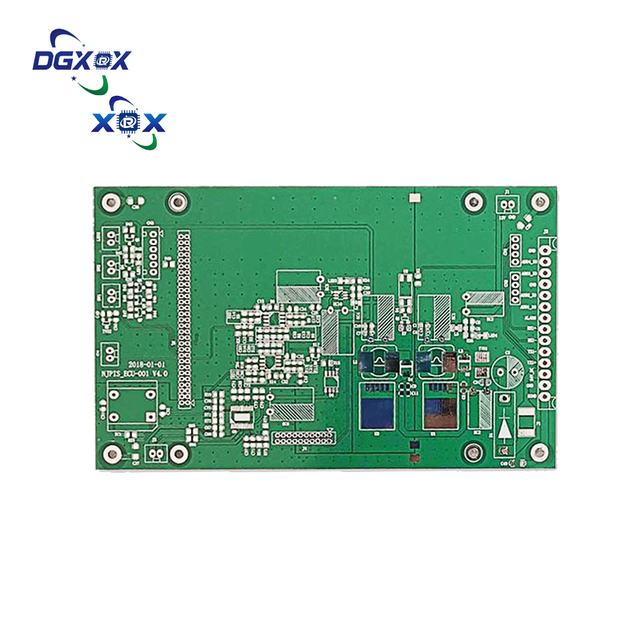
Rigid PCBs provide unmatched stability for industrial control systems, power electronics, and automotive modules. They maintain precise signal paths and withstand continuous operation without warping. Semi-rigid PCBs offer slight flexibility, allowing minor bending while keeping traces intact, making them ideal for applications where boards must fit into limited spaces or moving assemblies. Engineers at Xinrongxing tailor materials and thicknesses to each industrial requirement, ensuring reliability in demanding environments.
● Industrial Applications
○ Automation systems: motor controllers and sensor boards that require consistent performance.
○ Power electronics: inverters and converters operating under high current.
○ Automotive electronics: engine modules and infotainment systems that demand durability.
Flexible PCBs can bend, twist, or fold to accommodate compact designs. Rigid-Flex PCBs combine stable rigid areas with flexible sections, offering both structural integrity and adaptability. These designs help reduce the complexity of wiring, improve vibration resistance, and allow installation in tight or moving assemblies. Xinrongxing customizes flexible and rigid-flex PCBs using high-grade polyimide films and tailored trace layouts for optimized industrial integration.
● Key Benefits
○ Compact form factor for constrained spaces.
○ Improved vibration tolerance in robotic or automated equipment.
○ Simplified assembly and efficient wiring paths.
HDI and multi-layer PCBs support dense circuit layouts and advanced signal routing. These boards are essential for industrial automation, energy management systems, and aerospace applications that demand high reliability and space-efficient designs.
PCB Type | Typical Layers | Main Advantage | Example Applications |
HDI | 4–12 | High component density | Compact control systems, communication devices |
Multi-Layer | 6–16 | Complex routing and improved signal integrity | Automation systems, power distribution modules |
These PCBs allow engineers to integrate more functionality into smaller footprints, improving performance and reducing electromagnetic interference. Xinrongxing ensures precise fabrication and testing, making HDI and multi-layer boards robust for industrial challenges.
Specialized PCBs are built for extreme conditions. Metal-core PCBs manage heat in high-power electronics. Ceramic PCBs maintain structural and electrical integrity in high-temperature or precision-sensitive environments. RF and high-frequency PCBs handle fast signals and critical communications while minimizing interference.
● Applications
○ Metal Core: power modules, high-power LED lighting.
○ Ceramic: aerospace sensors, high-precision instruments.
○ RF/HF: wireless communication devices, radar and navigation systems.
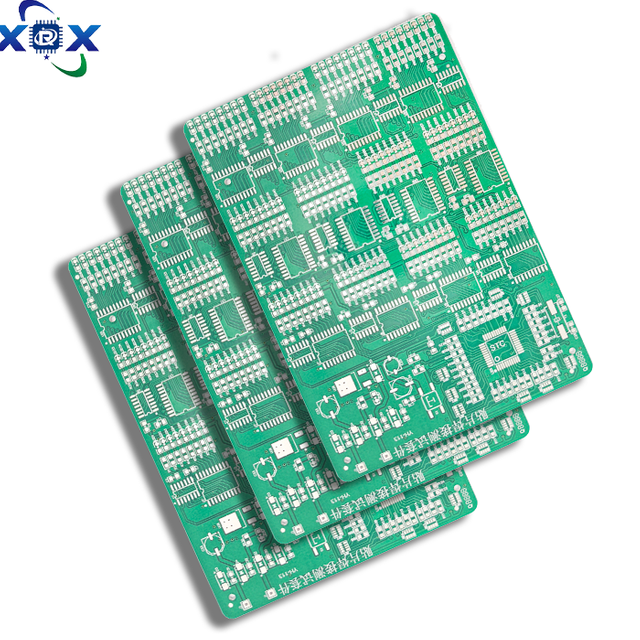
Custom PCB Manufacturing ensures boards can withstand harsh industrial environments. Material selection plays a crucial role. Engineers choose substrates, copper thickness, and coatings for thermal, moisture, and mechanical resistance. Rigorous testing processes verify performance before deployment, reducing failures and operational interruptions.
Xinrongxing applies advanced inspection techniques to guarantee each board meets precise standards.
● Critical Factors
○ Materials: FR4, metal-core, ceramic, or flexible films tailored to environment.
○ Components: High-quality, temperature-resistant parts for industrial use.
○ Testing: Electrical and functional tests simulate real-world conditions.
Custom PCBs simplify integration into specialized machinery. Boards are designed to fit exact equipment dimensions, ensuring efficient operation. Optimized trace routing and component placement enhance connectivity, reducing wiring complexity. This leads to faster installation, fewer errors, and more reliable system performance.
● Integration Benefits
○ Tailored layouts: fit machinery without modifications.
○ Optimized connectivity: reduces interference and latency.
○ Assembly efficiency: faster deployment and less rework.
Custom PCB Manufacturing supports prototypes, small-batch runs, and full-scale production. Rapid-turnaround options allow urgent projects to meet deadlines without sacrificing quality. This flexibility is vital for industries testing new equipment, iterating designs, or scaling successful systems.
Production Type | Ideal Use | Turnaround |
Prototype | Early-stage testing | 24–48 hours |
Small-Batch | Niche applications | 3–5 days |
Mass Production | Full industrial deployment | Standard lead time |
Xinrongxing leverages advanced equipment and experienced engineers to manage production at all scales, ensuring consistency and quality across prototypes, limited runs, or large-scale manufacturing.
Selecting a PCB manufacturer is more than a purchase decision—it’s a strategic choice for your industrial operations. Experience matters, especially in custom PCB Manufacturing for demanding applications. Manufacturers with a strong track record understand material behaviors, tolerances, and design complexities. They can provide guidance on layer configurations, substrate selection, and environmental considerations.
● Key Considerations
○ Technical Support: Access to engineers who can advise on design optimization and material choices.
○ Industry Experience: Proven ability to deliver PCBs for industrial control systems, power electronics, and automation.
○ Problem-Solving: Manufacturers that anticipate challenges reduce production delays and improve overall quality.
The manufacturer’s equipment and technology directly impact PCB quality. Advanced machinery ensures precise etching, drilling, and lamination, essential for multi-layer, HDI, or flexible boards. Testing capabilities—such as automated optical inspection and electrical verification—guarantee consistency. Access to cutting-edge technology allows rapid prototyping and quick-turn production without compromising standards.
Equipment & Technology | Function | Benefit |
Multi-layer Fabrication | Builds complex PCBs | Supports high-density and space-constrained designs |
HDI & Microvias | High trace density | Enables compact, signal-intensive boards |
Flexible PCB Equipment | Polyimide & rigid-flex | Adapts to wearable or compact industrial devices |
Automated Testing | Electrical & optical | Ensures defect-free boards |
Certifications reflect a manufacturer’s commitment to quality and industry standards. ISO9001 ensures rigorous quality management processes. RoHS compliance guarantees environmentally safe materials. Other industry-specific certifications demonstrate adherence to regulations, whether for aerospace, automotive, or medical-grade electronics.
● Certification Importance
○ ISO9001: Standardized procedures, consistent quality.
○ RoHS: Limits hazardous substances, supports sustainability goals.
○ Specialized Certifications: Guarantees performance for niche industrial sectors.
Custom PCB Manufacturing enables industrial systems to run reliably. Xinrongxing provides durable, high-performance PCBs tailored for harsh environments and complex machinery. Their expertise ensures precise layouts, advanced materials, and flexible production scales, delivering value and efficiency to industrial applications.
A: PCB Manufacturing is the process of designing and producing printed circuit boards for industrial and specialized applications.
A: Custom PCB Manufacturing offers enhanced reliability, tailored functionality, and seamless integration for demanding industrial environments.
A: Xinrongxing uses advanced materials, rigorous testing, and precise fabrication to ensure durable and high-performance PCBs.
A: Yes, PCB Manufacturing supports both prototypes and large-scale production with rapid turnaround options for industrial projects.
A: Industrial automation, power systems, aerospace, and specialized machinery all gain improved performance from custom PCB Manufacturing.


